2 min
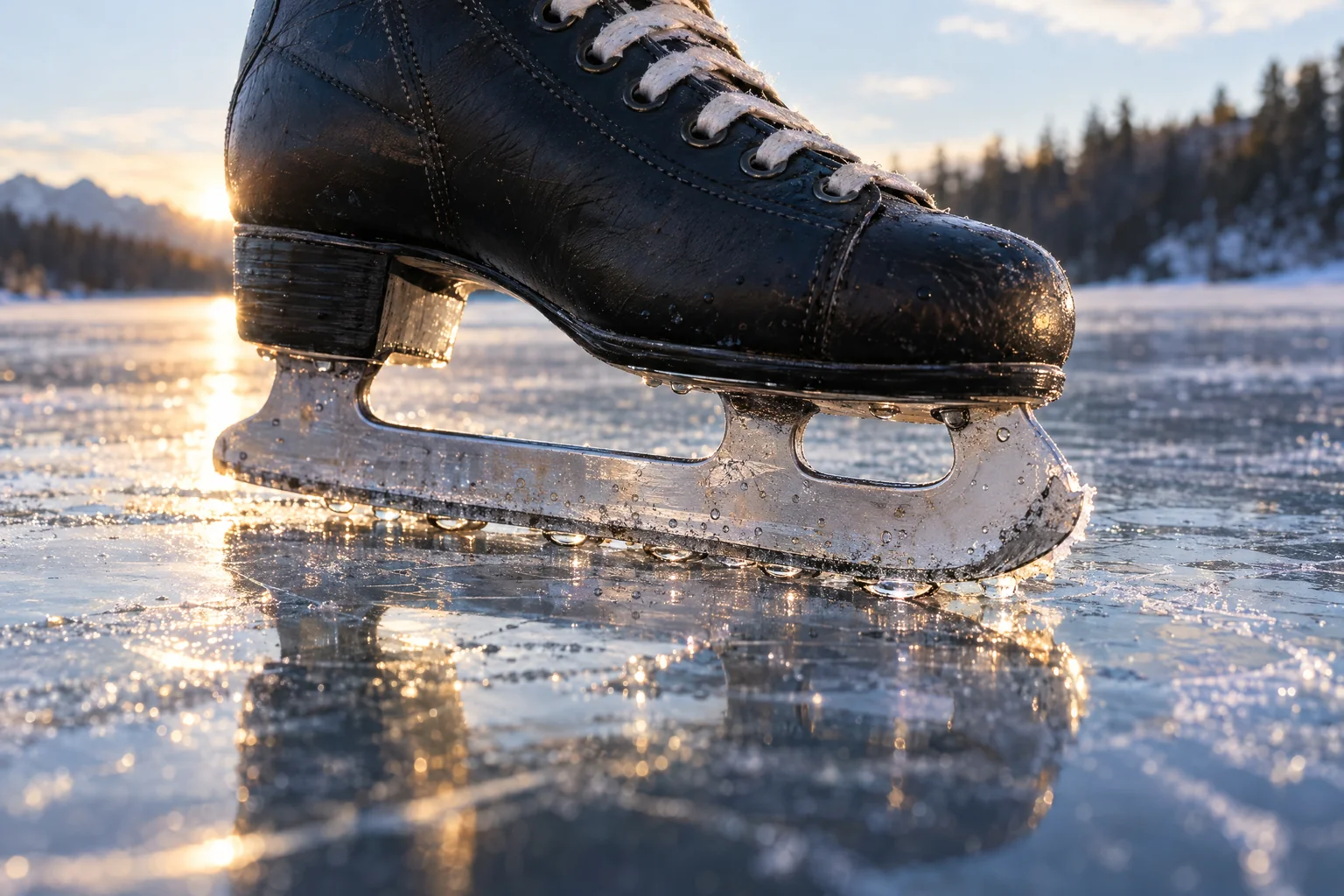
Why is ice so slippery? The textbook answer is wrong.
The classic explanation — "the pressure of the skate melts the ice" — does not survive a quick calculation. The real reason is that the surface of ice is covered in molecules that never quite settle down.
Answer
The truth is stranger than the textbook.
The classic answer says that the huge pressure under a skate melts the ice into a thin film of water, and that film is what makes it slippery. Do the maths and it falls apart: to melt ice at 0°C with pressure alone you would need about 100 times normal air pressure — the same as an elephant standing on one finger. A person on skates comes nowhere near that.
The real answer has two parts:
- The premelting layer. Even at tens of degrees below zero, the surface of ice always carries a layer a few molecules thick that is not fully locked into the crystal. Those molecules never settle down, and that is what is slippery.
- Friction makes heat. As soon as you slide, friction melts a little more of the surface into water, and that water reduces friction even further — a loop that feeds itself.
A 2019 study in Physical Review X went further and found that what really decides how slippery ice is, is the vibration of the molecules at its surface.
In one line: ice is slippery because its surface is covered in molecules that refuse to line up properly.
A stranger fact: this is also why ice gets less slippery in extreme cold (below about −30°C). The molecules are frozen too still, the water film cannot form in time, and ice rinks have to keep their ice at a controlled temperature to stay fast.
Michael's Thought
I like this kind of fact best — the textbook answer was wrong. Grown-ups get things wrong too, and sometimes for a very long time.
Sources
Related WHYS
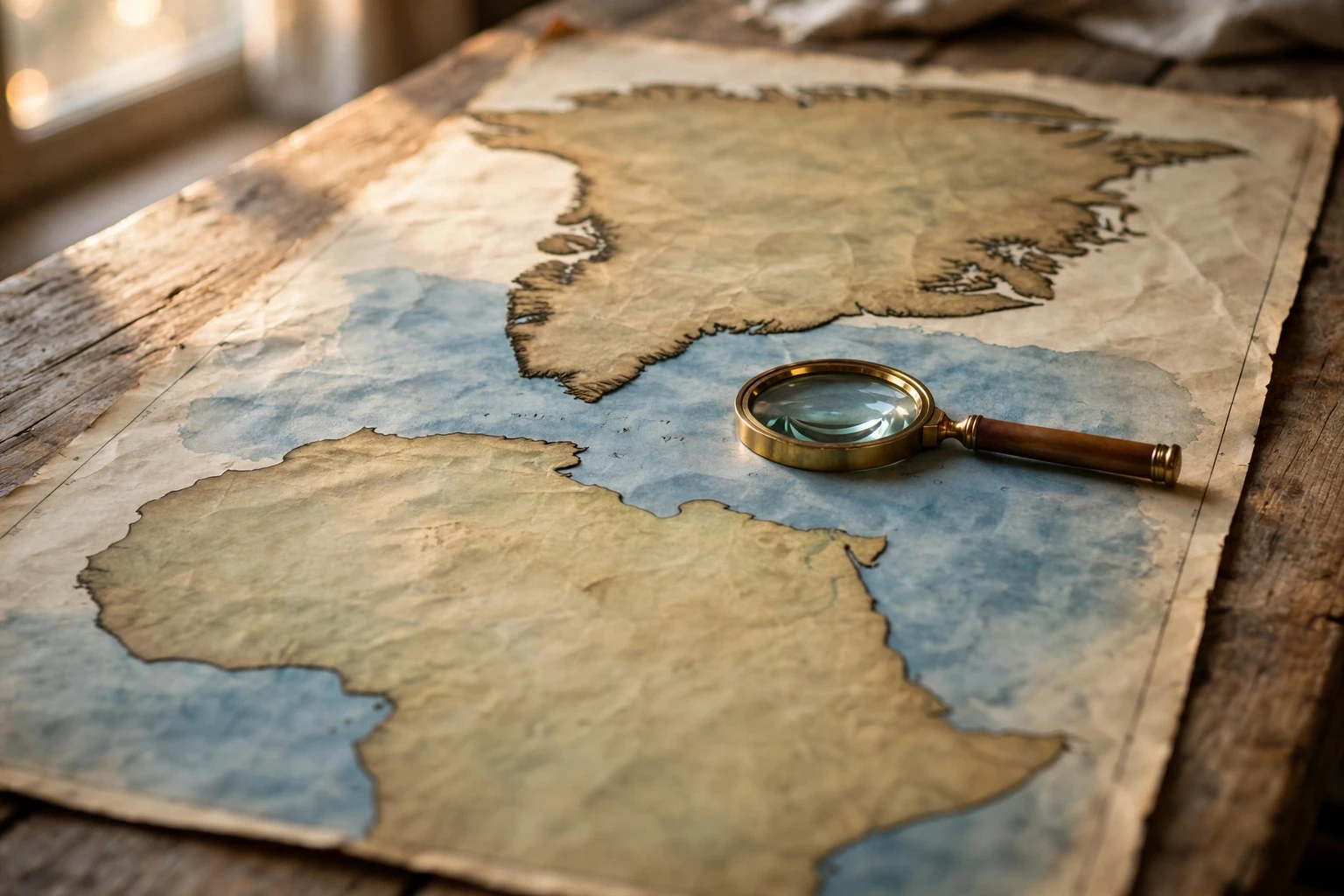
Why does Greenland look as big as Africa on a world map?
On a world map, Greenland looks almost as big as Africa. In reality Africa is 14 times larger. The map is not misprinted — it is a trade-off made so sailors never have to turn.

Why is writing backwards in a mirror? — And the direction a mirror flips isn't left-right at all
A mirror only reverses the axis pointing straight out of the glass — front to back. The famous left-right flip is not optics at all; it is a story our brain writes.
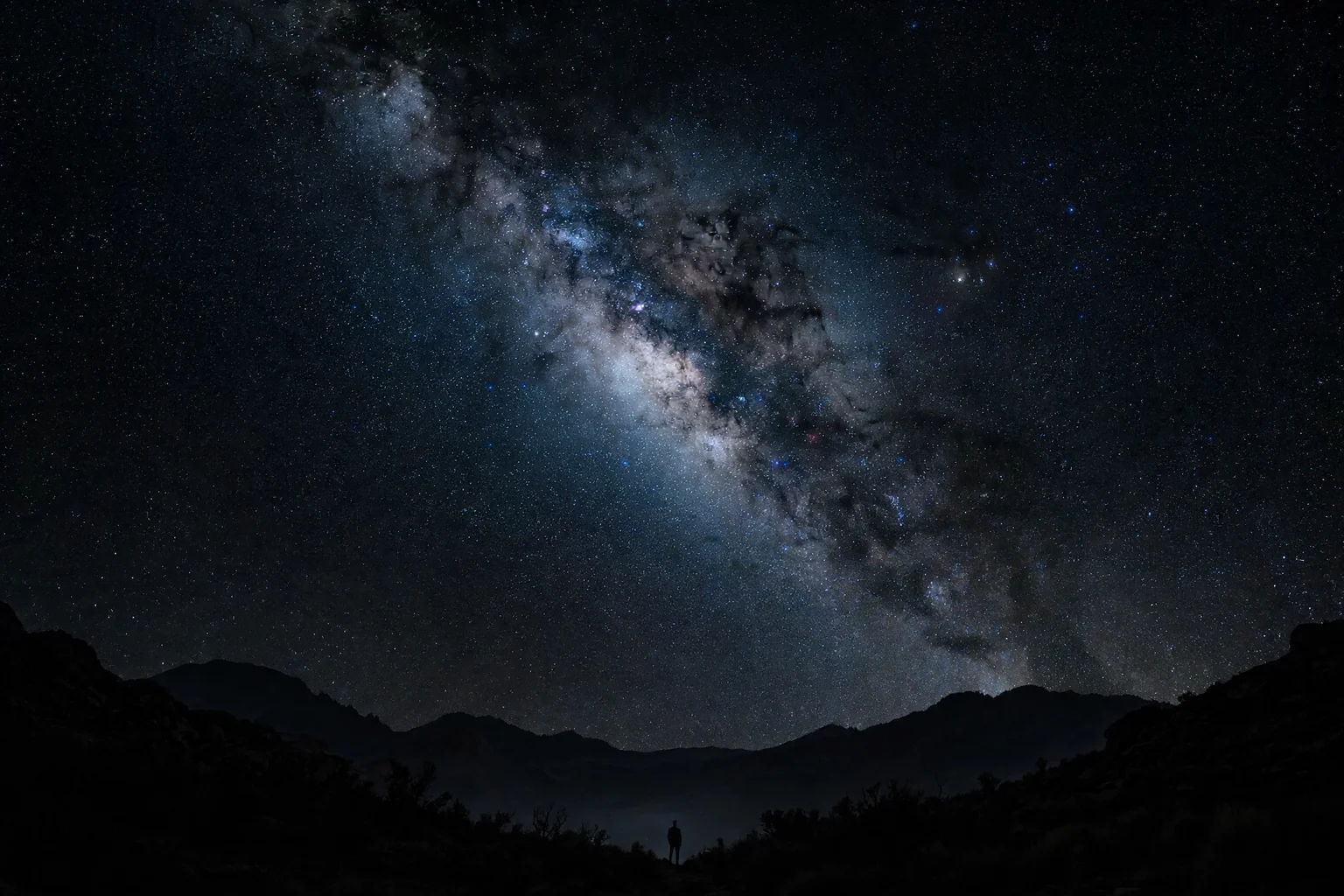
If there are countless stars, why is the night sky dark?
Slice the universe into shells of equal thickness and the sky should blaze like the Sun's surface. It doesn't — and the answer lies in the universe's age and its expansion.