1 min
Why can't I tickle myself?
Being ticklish is not really about your skin. It is your brain asking, "did I do that?" When you tickle yourself, the cerebellum warns the rest of the brain in advance — so the signal gets muted.

Answer
The answer is in your cerebellum.
The cerebellum is a predictor. The moment you decide to tickle yourself, it works out the timing, the place and the pressure in advance, then sends a message to the rest of your brain: "I sent that signal myself — ignore it." So the same touch gets muted on purpose.
One experiment is beautifully designed. A feather is fixed to a machine, and a person tickles themselves by moving a joystick. The tickle comes back. The machine adds a small delay, so the cerebellum's prediction no longer matches the real touch, and the muting fails.
So being ticklish is not really about your skin. It is your brain asking: did I do that?
In one line: what tickles is not your skin — it is how surprised your brain is. Other people tickle you because other people will always be outside your predictions.
A stranger fact: people with schizophrenia can often tickle themselves. Their self-prediction system is not working properly.
Try it: ask a friend to trace a letter on your palm, then trace the same letter on your own palm. Most people find the two feel completely different. Can you tell "someone else" from "me"?
Michael's Thought
So whether I feel ticklish depends on whether my brain thinks I did it. My own hand can never surprise me.
Sources
Related WHYS

Why does a mint candy feel icy cold when it is just room temperature?
A mint candy cools nothing down, yet it feels like ice. Menthol simply flips the body's cold switch, TRPM8, so the brain receives a fake message that says cold.

Why do we hiccup, and why can't we stop?
A hiccup is not a random twitch: the diaphragm jerks, then the glottis snaps shut about 35 milliseconds later, cutting off the air. Hiccups have been recorded only in mammals — and tadpoles use almost the same reflex to push water over their gills.
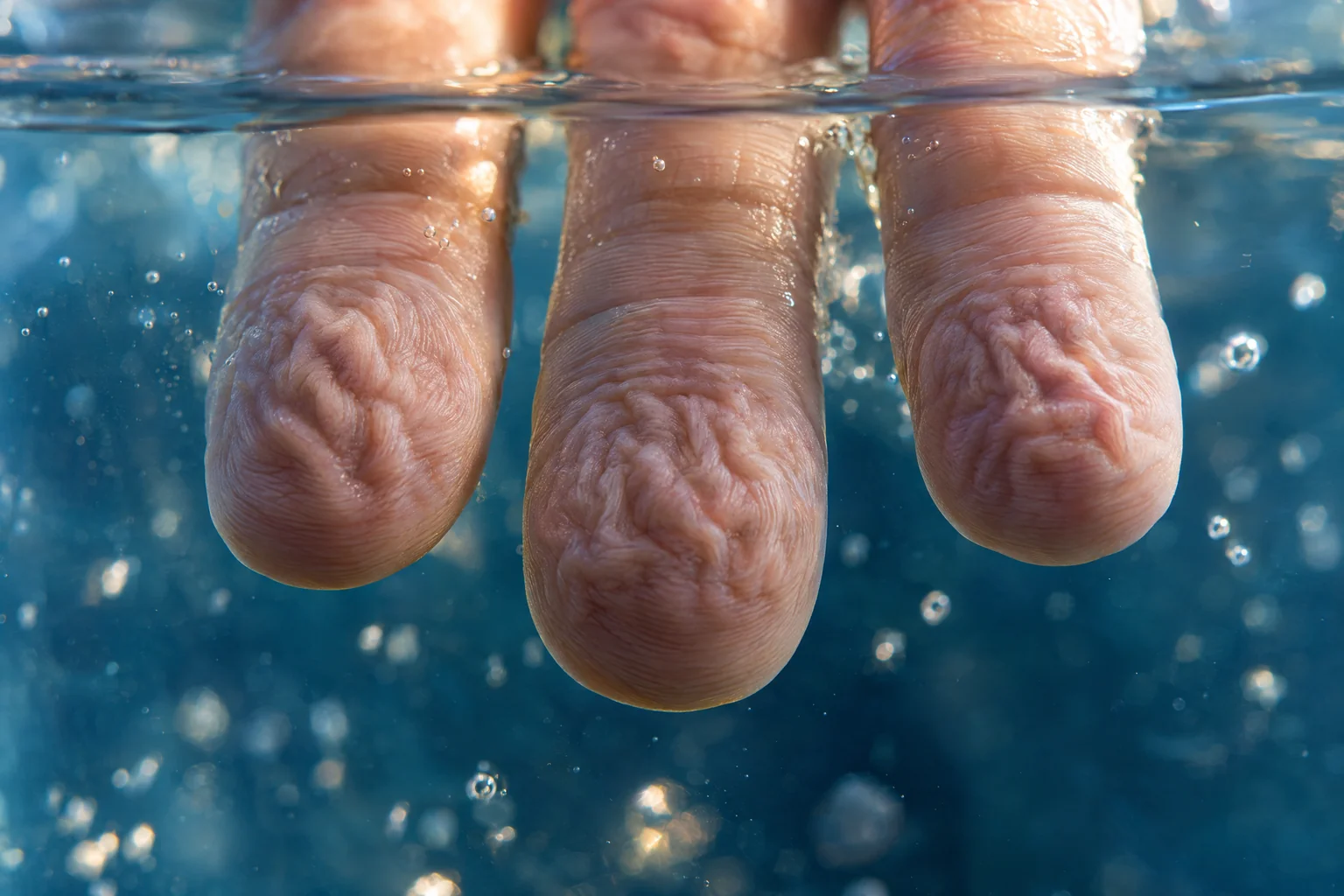
Why do your fingers wrinkle in water?
Wrinkly fingers are not swollen skin. Your nerves tell the blood vessels underneath to squeeze shut, the fluid is pulled away, and the skin sinks into folds. Nerve-injury patients gave the secret away back in 1935.