2 min
Why don't woodpeckers get brain damage from pecking?
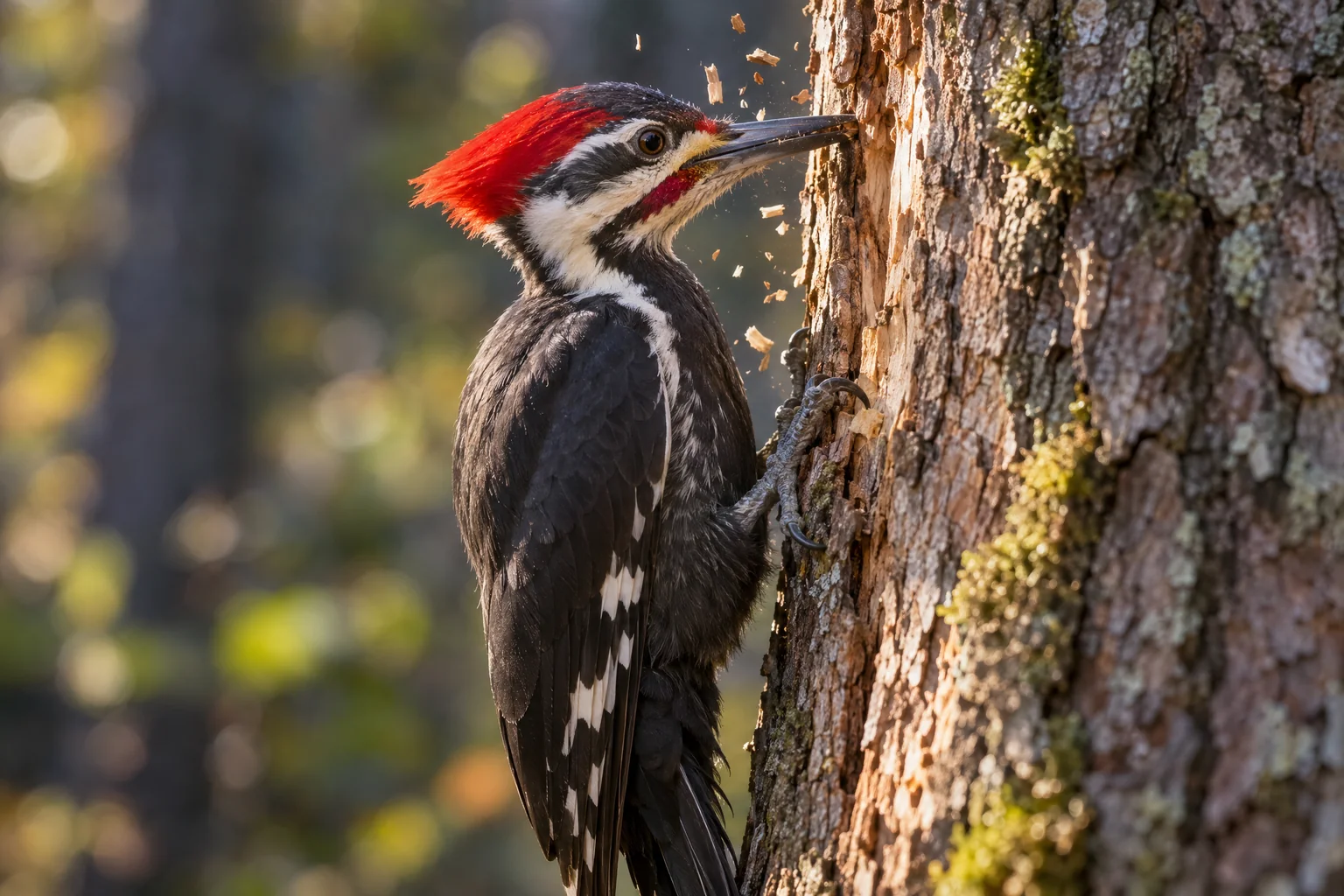
A woodpecker hammers a tree 15 to 20 times a second, thousands of times a day, and each hit slows its head down by about 1000 g. Textbooks said its skull is a shock absorber. A 2022 study found the opposite: it survives by being stiff, not soft.
Answer
One bird, twelve thousand tree hits a day
Have you ever heard a "rat-a-tat-tat" sound in the park? That is a woodpecker knocking on a tree with its beak. It can peck 15 to 20 times every second — about twelve thousand times in a single day. Each time it hits, its head stops in a flash, and the force is about 1000 g. That is ten times more than a fighter pilot can take.
If you did that, you would feel dizzy after a few knocks. But a woodpecker just shakes its head and keeps going.
So what protects it?
Older books said a woodpecker's head is a built-in crash helmet. Its tongue bone is super long: it starts at the nostril, loops all the way around the back of the skull like a seat belt, and holds everything tight. The skull is full of spongy little bone plates that soak up the shock.
But in 2022, scientists filmed woodpeckers with super-slow cameras and found the opposite. The skull is very stiff and soaks up almost nothing.
Why would that help? Because soaking up shock would make the peck weak. A woodpecker needs to send the force straight into the trunk so it can chip the wood open and pull out insects. So it uses its head like a hammer — hard against hard.
The real secret is not letting anything wobble. The brain fits tightly against the skull, with almost no gap, so it has no room to bounce around. And a split second before the beak lands, a thin film slides over each eye to protect it.
Try it yourself
Take two identical plastic bottles. Fill one to the top with water, and fill the other only halfway. Screw the caps on and shake both hard. The full bottle barely moves inside, while the half-full one sloshes and rattles like crazy.
A woodpecker's brain is like the full bottle: packed tight with no empty space, so it cannot bang around inside.
Michael's Thought
I tapped the table with my finger. After about ten taps it started to hurt. A woodpecker taps twelve thousand times a day — it must be really good at it.
Sources
Related WHYS
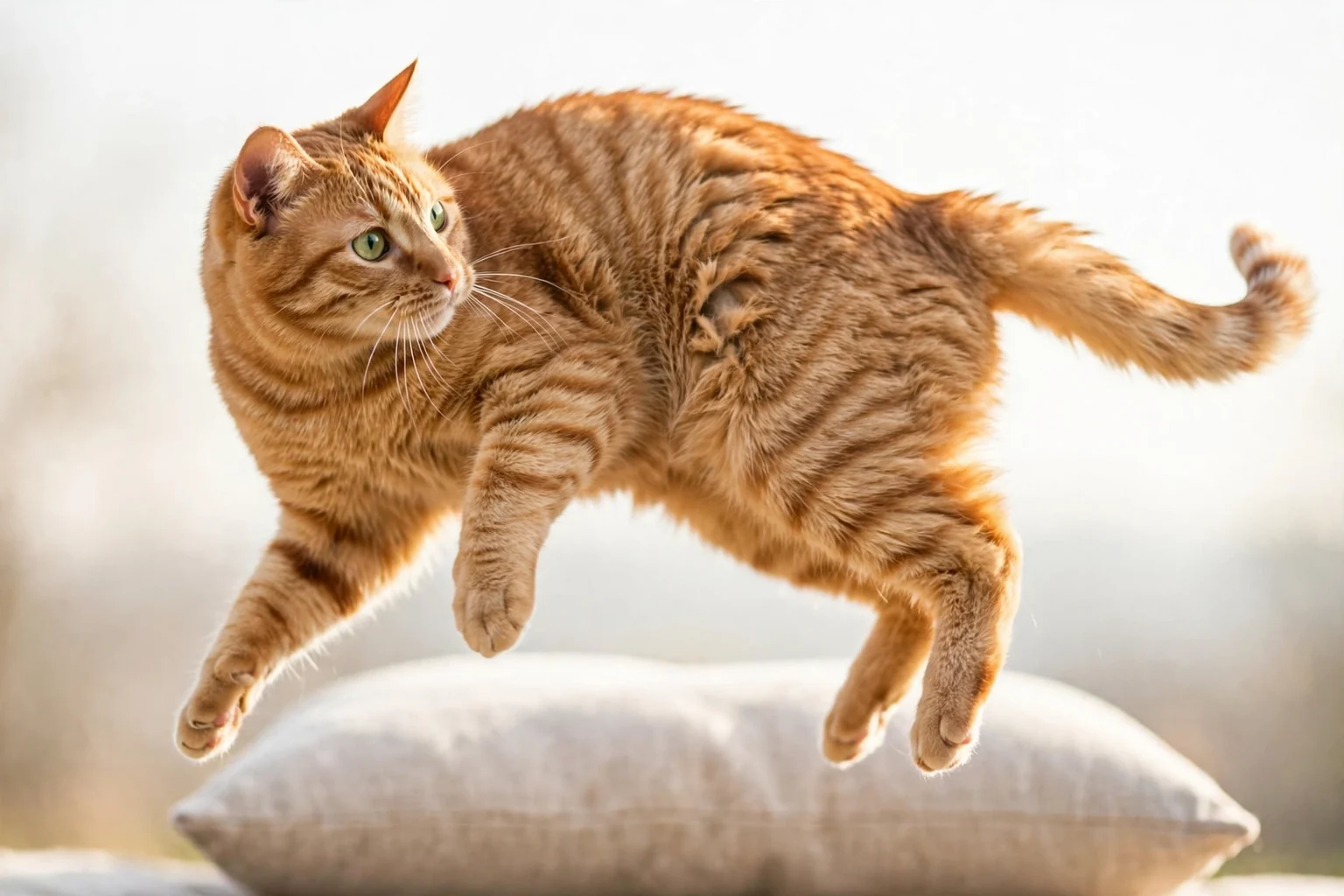
Why do cats almost always land on their feet?
Cats flip in mid-air not because they have nine lives, but by splitting one turn into two: 90° with the front half, 10° the other way with the back. And the idea that higher floors are safer is a statistical trap.
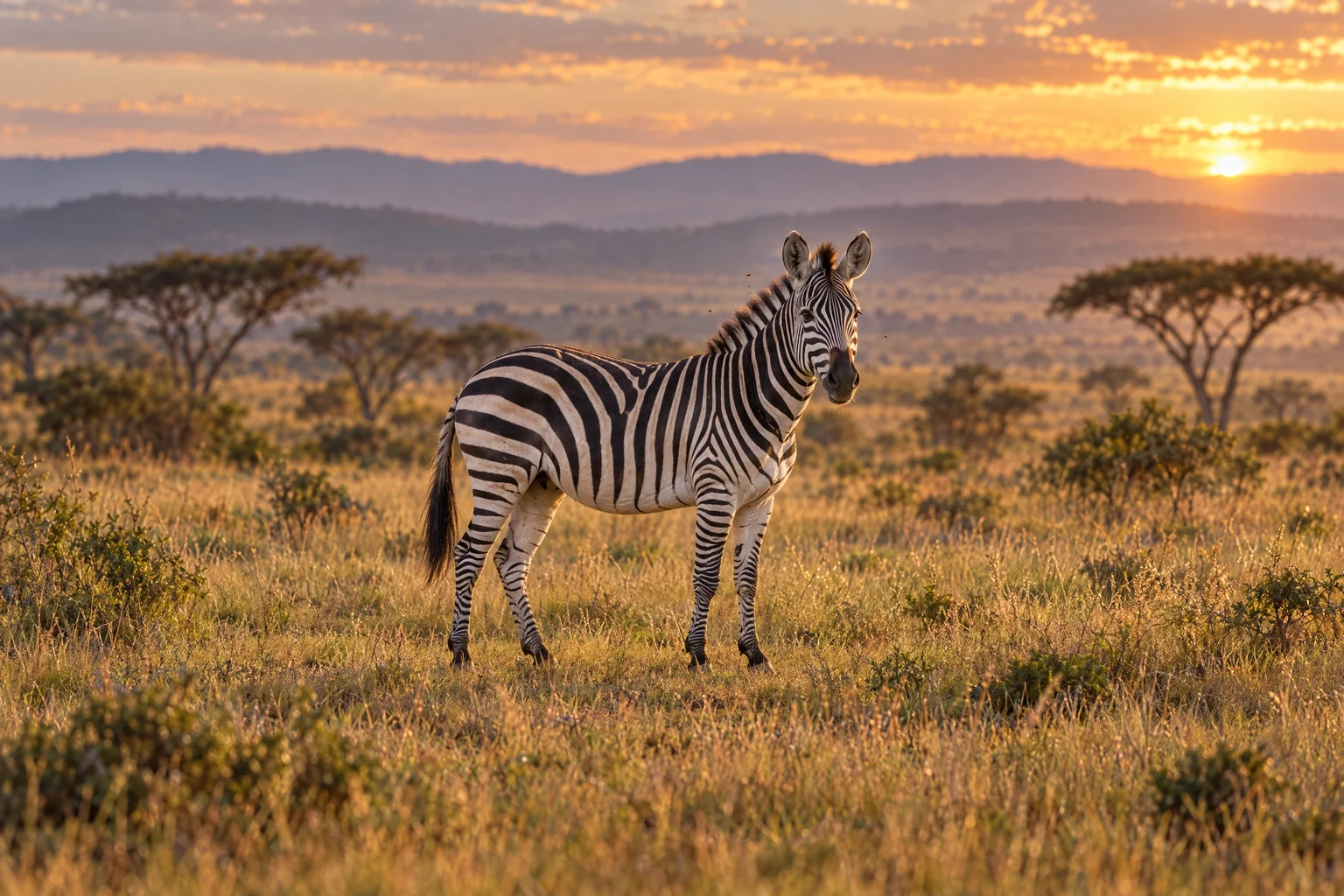
Why do zebras have stripes?
Zebra stripes are usually explained as camouflage, but a 2014 global study found almost no link between stripes and predators — while stripes matched the map of biting flies almost perfectly. The best-supported idea today: stripes keep flies from landing.
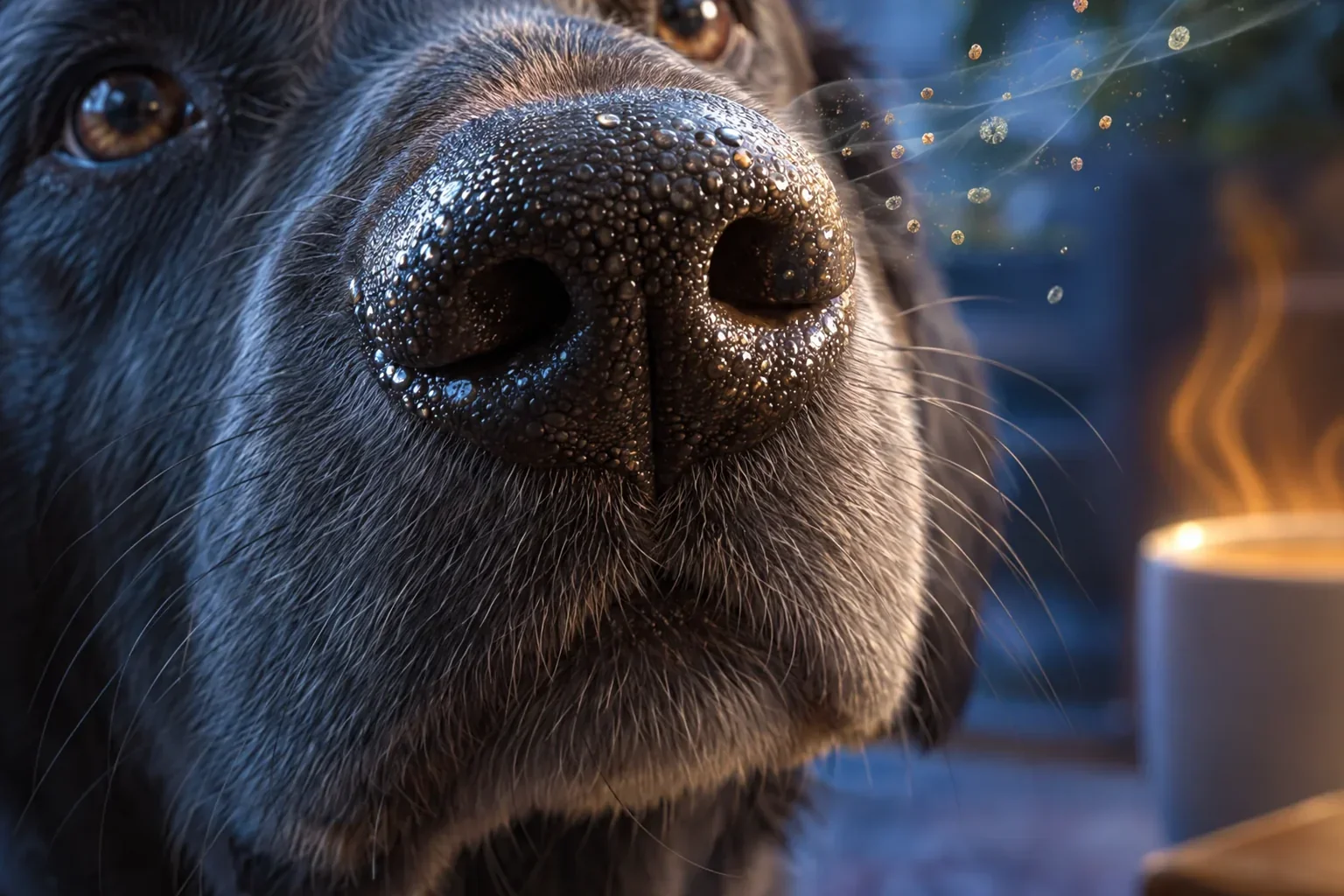
Why do dogs have wet noses?
That slimy layer is not a health sign — it is a sticky net that traps smell molecules. A 2020 study even found a dog's cool nose can sense weak heat from 1.5 metres away.