2 min
Why does a half-twisted strip of paper end up with only one side?
A normal paper loop has an inside and an outside, a top edge and a bottom edge. Twist it once before gluing and the two sides join into one path, and the two edges become a single line.

Answer
Take a strip of paper, give it half a twist, and glue the ends together. You now have something strange: a shape with only one side and one edge. It is called a Möbius strip.
An ordinary paper loop has an inside and an outside, a top edge and a bottom edge. Twist it once before gluing and the inside joins the outside into a single path, and the two edges join into a single line. You can put a pen down and draw along the whole strip without ever crossing an edge, because there is no "other side" to turn over to.
In 1858, the German mathematician August Möbius and his colleague Listing found it independently, almost at the same time. It is the simplest example in mathematics of a non-orientable surface — a surface on which you cannot consistently label one side "front" and the other "back".
Cutting it is even better. Cut along the middle and you expect two loops; instead you get one large loop, twice as long, with two full twists in it. Cut a third of the way in and you get a Möbius strip and a larger loop, linked together and impossible to separate.
It has been doing real work for a long time. Make a conveyor belt as a Möbius strip and both faces wear evenly, nearly doubling its life. Old printer ribbons and eight-track tapes use the same trick to get twice the length out of one strip. The three chasing arrows of the recycling symbol follow the same path.
In one line: the Möbius strip is a reminder that changing the way you join two ends — just slightly — can turn "two sides" into one side and "two things" into one.
Michael's Thought
One half twist and two sides become one. It makes me wonder whether some things in my life would also become one thing if I joined them differently.
Sources
Related WHYS
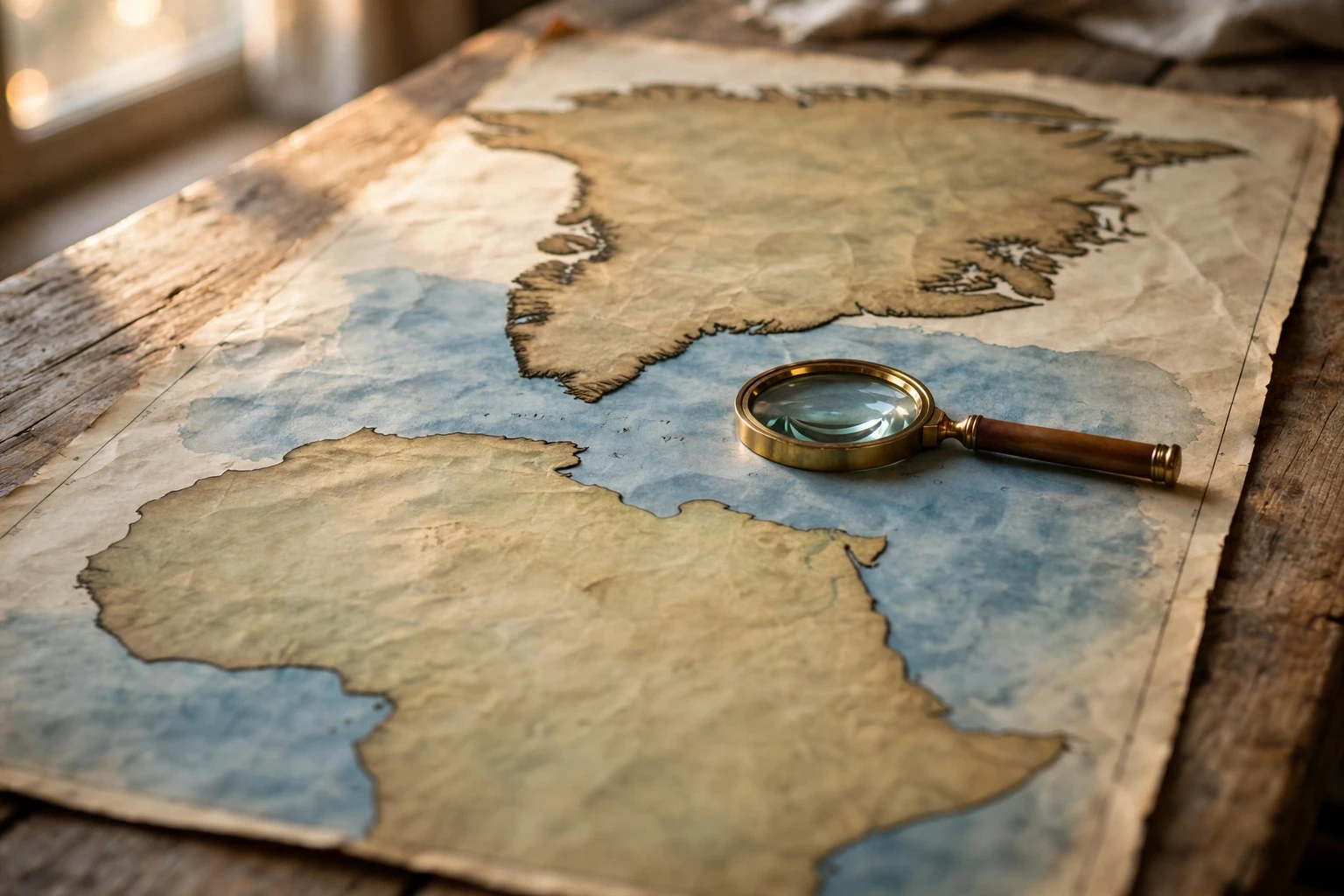
Why does Greenland look as big as Africa on a world map?
On a world map, Greenland looks almost as big as Africa. In reality Africa is 14 times larger. The map is not misprinted — it is a trade-off made so sailors never have to turn.

Why is writing backwards in a mirror? — And the direction a mirror flips isn't left-right at all
A mirror only reverses the axis pointing straight out of the glass — front to back. The famous left-right flip is not optics at all; it is a story our brain writes.
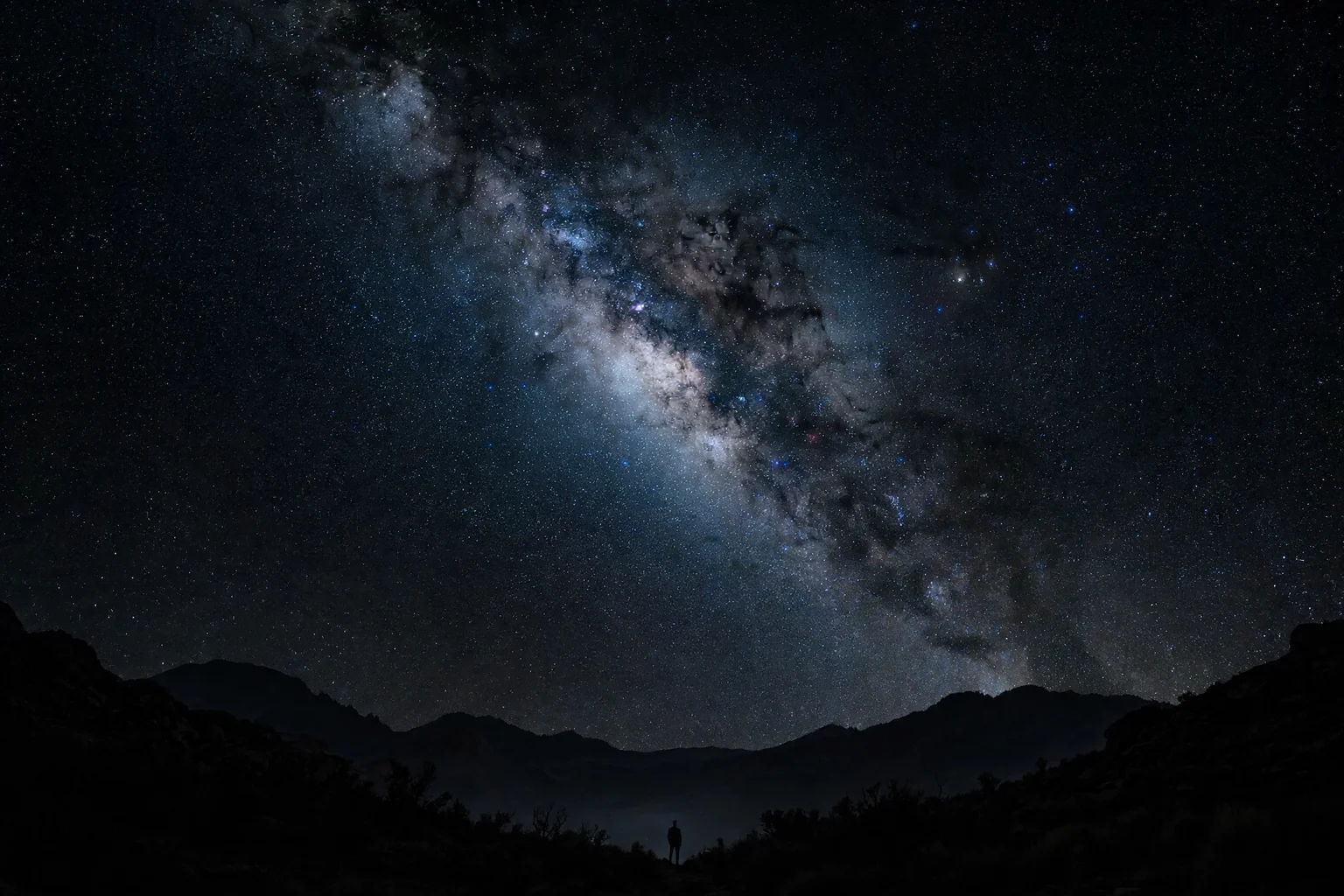
If there are countless stars, why is the night sky dark?
Slice the universe into shells of equal thickness and the sky should blaze like the Sun's surface. It doesn't — and the answer lies in the universe's age and its expansion.