2 min
Why do we get goosebumps — when they do nothing at all?
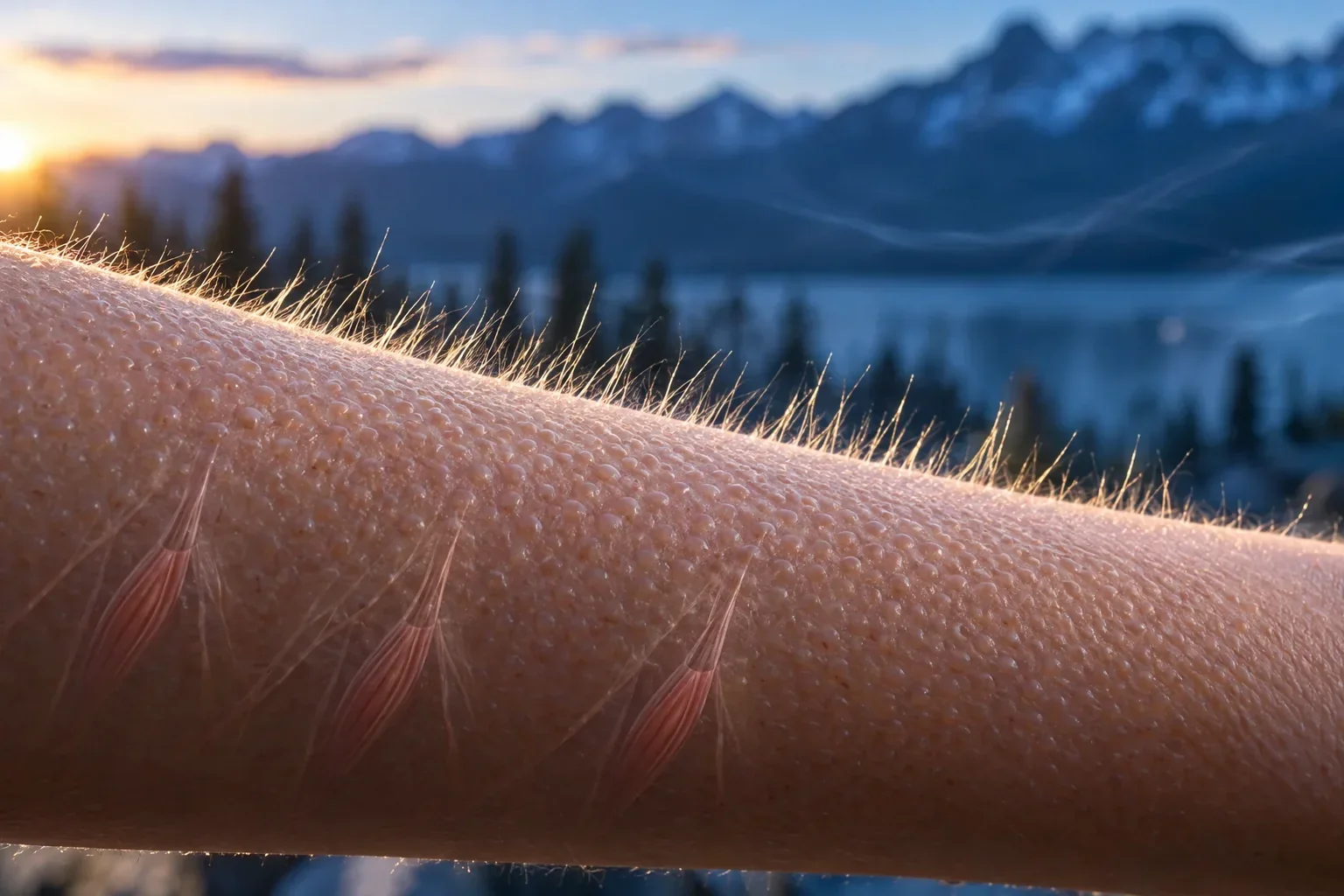
There is a tiny muscle in your skin called the arrector pili. It was genuinely useful to our furrier ancestors, but human hair is too thin now — so it survives as an obsolete command the body forgot to delete.
Answer
Hidden in your skin is a very small muscle called the arrector pili. When you get cold, the sympathetic nervous system fires a burst of noradrenaline at it. The muscle contracts, the hair is pulled upright, and the skin around each follicle rises into a bump. That is a goosebump.
In our furrier ancestors this was serious equipment. Standing hair traps a layer of air and works as insulation. Facing an enemy, it also makes an animal look one size bigger, which is a cheap way to bluff. A cat's puffed tail and a porcupine's raised quills use exactly the same mechanism.
The problem is that human body hair is far too thin now. Standing it up warms nothing and frightens no one. It has become a feature that was removed from the plan but never deleted from the code — an obsolete command still sitting in the body.
And here is the elegant part: the same wiring does a second job. The shiver you get when a piece of music or a scene in a film moves you — frisson — runs down the same pathway. About half of all people feel it often, and it correlates with the personality trait of openness. So next time you get goosebumps, you can read them as your ancestors applauding.
In one line: goosebumps are old code that no longer throws an error and no longer does anything — except occasionally get triggered by a song.
Michael's Thought
Goosebumps are old code in my body that does nothing any more. But a song can still trigger them. I think that is quite beautiful on its own.
Sources
Related WHYS

Why does a mint candy feel icy cold when it is just room temperature?
A mint candy cools nothing down, yet it feels like ice. Menthol simply flips the body's cold switch, TRPM8, so the brain receives a fake message that says cold.

Why do we hiccup, and why can't we stop?
A hiccup is not a random twitch: the diaphragm jerks, then the glottis snaps shut about 35 milliseconds later, cutting off the air. Hiccups have been recorded only in mammals — and tadpoles use almost the same reflex to push water over their gills.
Why do your fingers wrinkle in water?
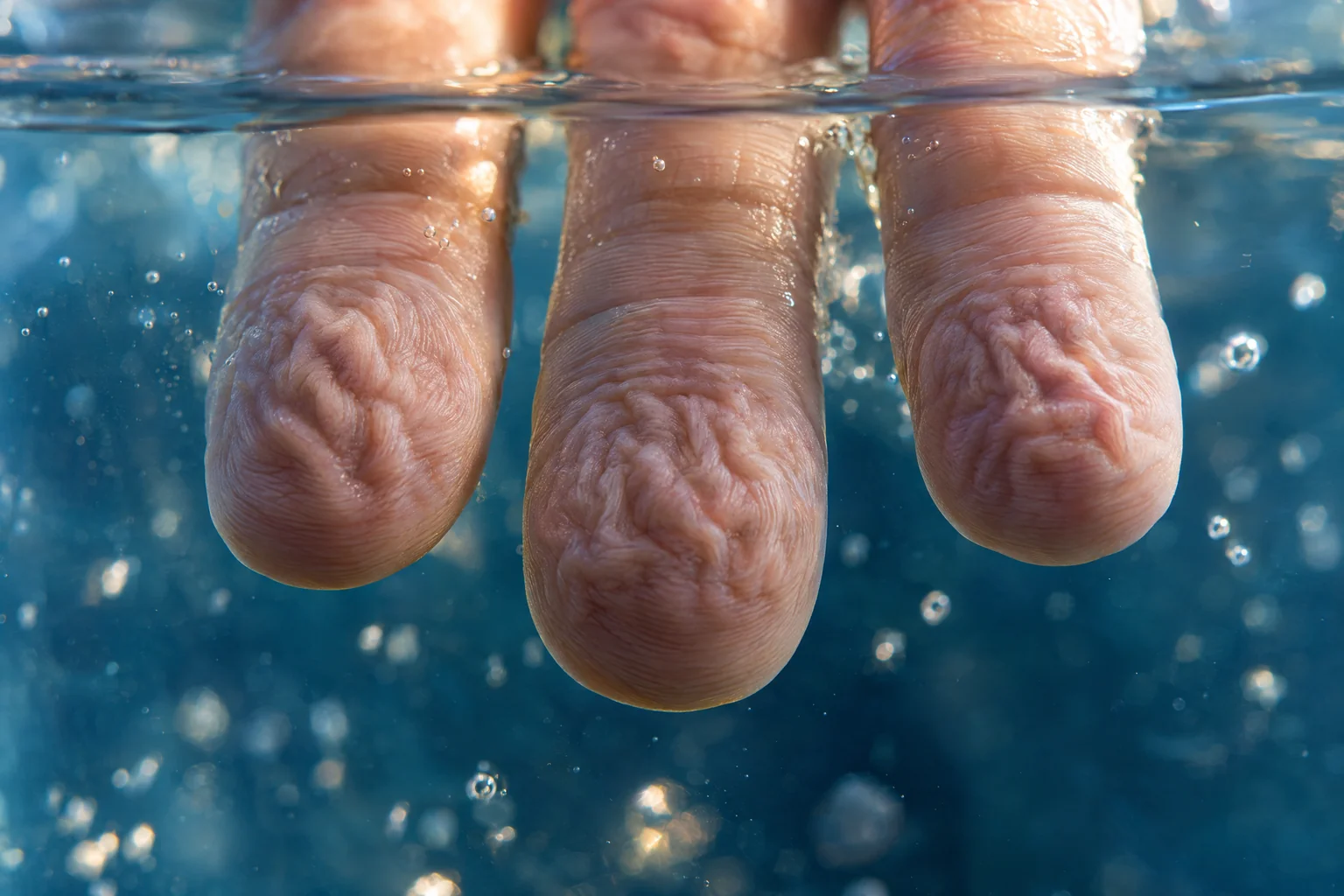
Wrinkly fingers are not swollen skin. Your nerves tell the blood vessels underneath to squeeze shut, the fluid is pulled away, and the skin sinks into folds. Nerve-injury patients gave the secret away back in 1935.