2 min
Why do cats purr?
Purring is not really an expression of mood — it is closer to a built-in vibration therapy. Cats purr when happy, frightened and in pain, because the frequency itself soothes and repairs.
Answer
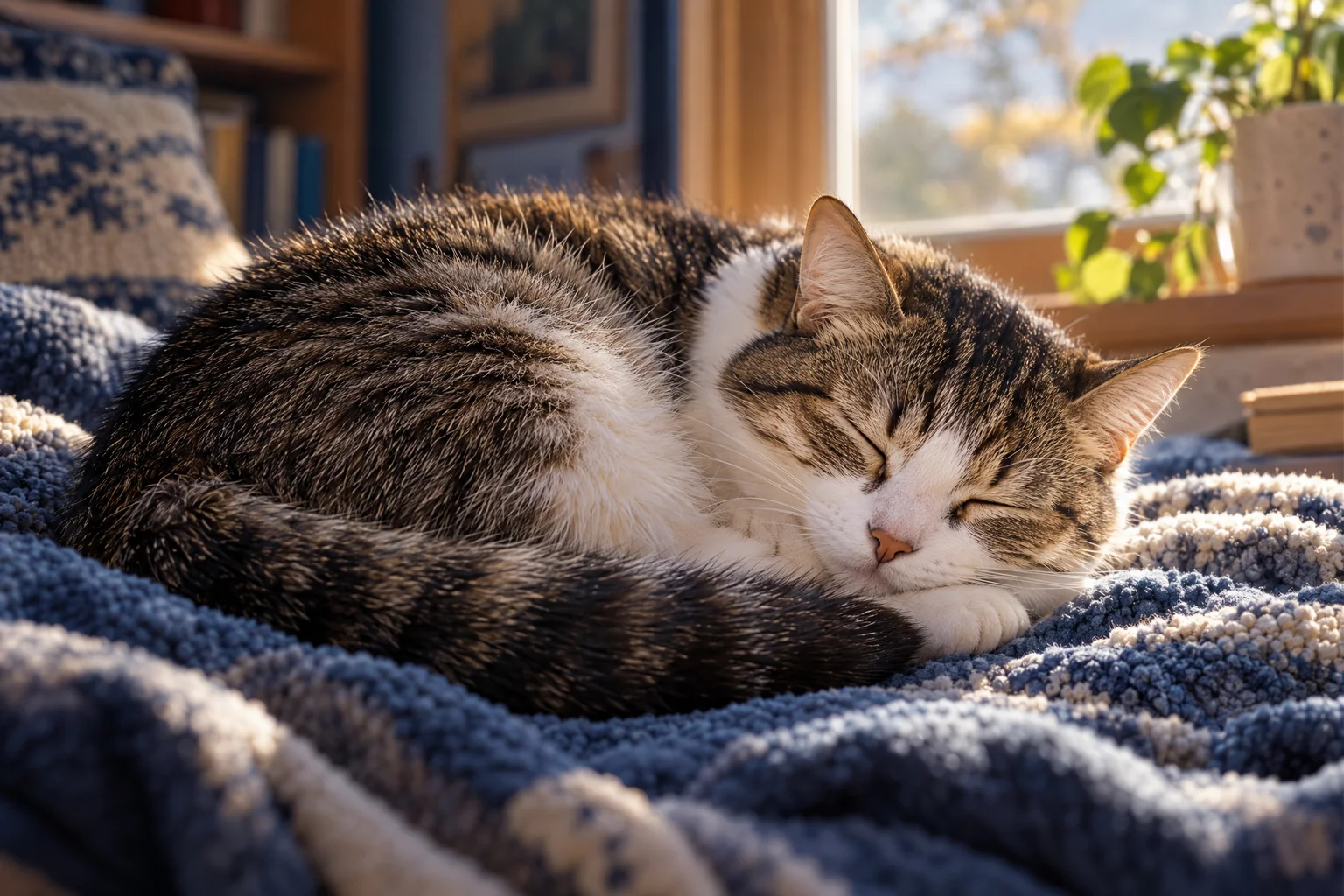
Your cat is on your lap, eyes shut, and a low rumble rolls out of its throat. Most people say that means "happy". But a mother cat purrs while feeding her kittens, and kittens purr at two days old, before their eyes are even open. Stranger still, cats purr while shaking with pain, and while terrified on the vet's table. Happy, frightened, hurting — the same sound every time. So what is the cat actually doing?
Purring is not really an expression of mood. It is closer to a built-in vibration therapy.
A cat's purr does not come from the vocal cords. The work is done by the diaphragm and the muscles of the larynx, contracting in a steady rhythm about 25 to 150 times a second, which makes air vibrate in and out at the glottis and produces a low-frequency hum. The frequency range is the interesting part: many studies put the main power of a purr at about 25 to 50 hertz, and that band happens to sit inside what researchers describe as an ideal window for stimulating bone healing and tissue repair. It also seems to ease pain and steady breathing.
So a mother cat purring while nursing may be giving her kittens a kind of physiotherapy for bones that are still forming. A sick or injured cat purring looks much more like self-soothing and self-repair. There is a simpler explanation too: a purr is a contact signal, a low rumble that tells other cats nearby "I am here, and it is safe."
Next time your cat starts its engine on your lap, you could read it as doing two things at once: giving itself treatment, and checking in with you.
In one line: a purr does not mean "I am happy" — it means "I am repairing myself, and I am telling you where I am."
Michael's Thought
So a purr is not "I am happy" — it is "I am treating myself". That means the cat on my lap is running a physiotherapy session.
Sources
Related WHYS
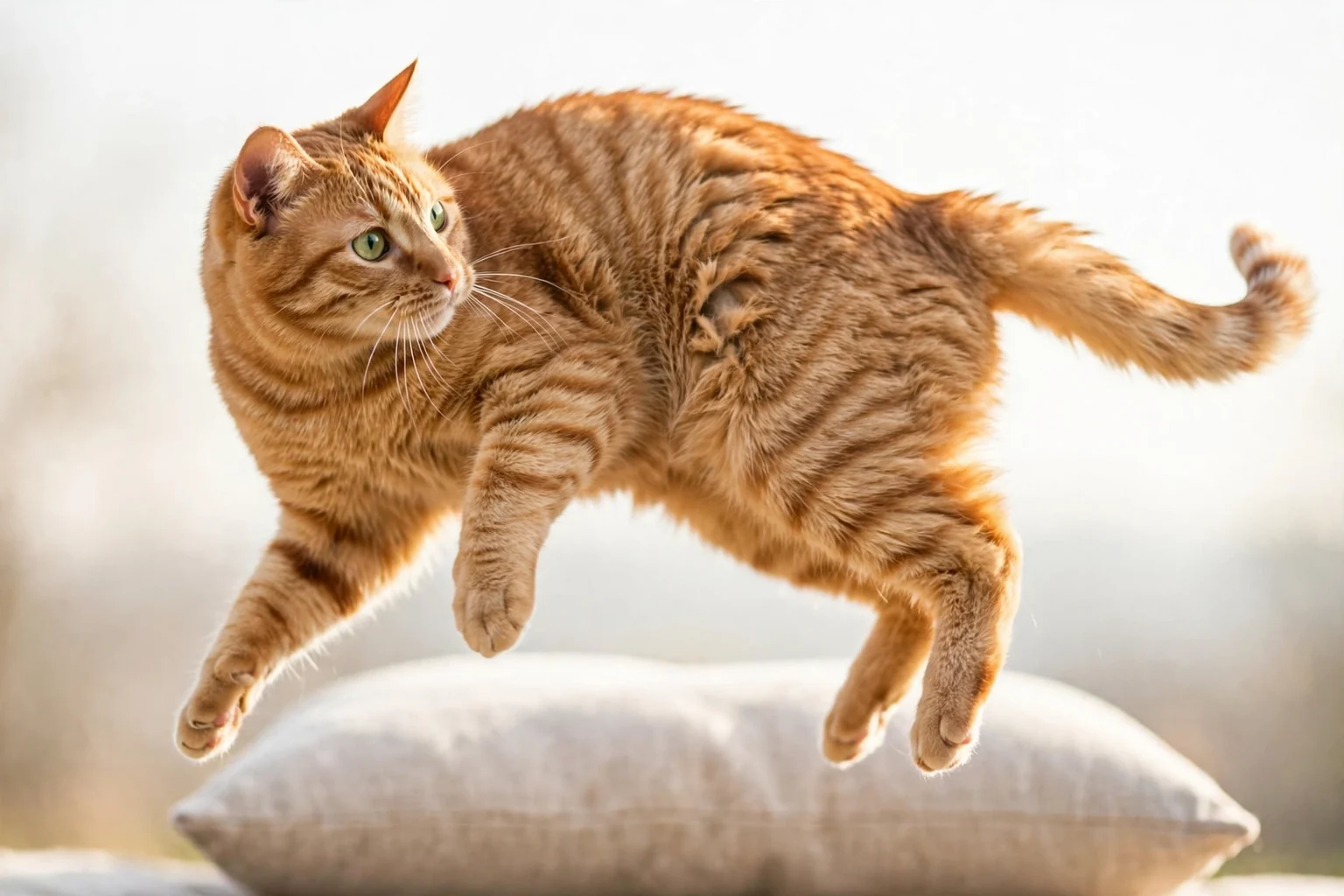
Why do cats almost always land on their feet?
Cats flip in mid-air not because they have nine lives, but by splitting one turn into two: 90° with the front half, 10° the other way with the back. And the idea that higher floors are safer is a statistical trap.

Why do zebras have stripes?
Zebra stripes are usually explained as camouflage, but a 2014 global study found almost no link between stripes and predators — while stripes matched the map of biting flies almost perfectly. The best-supported idea today: stripes keep flies from landing.
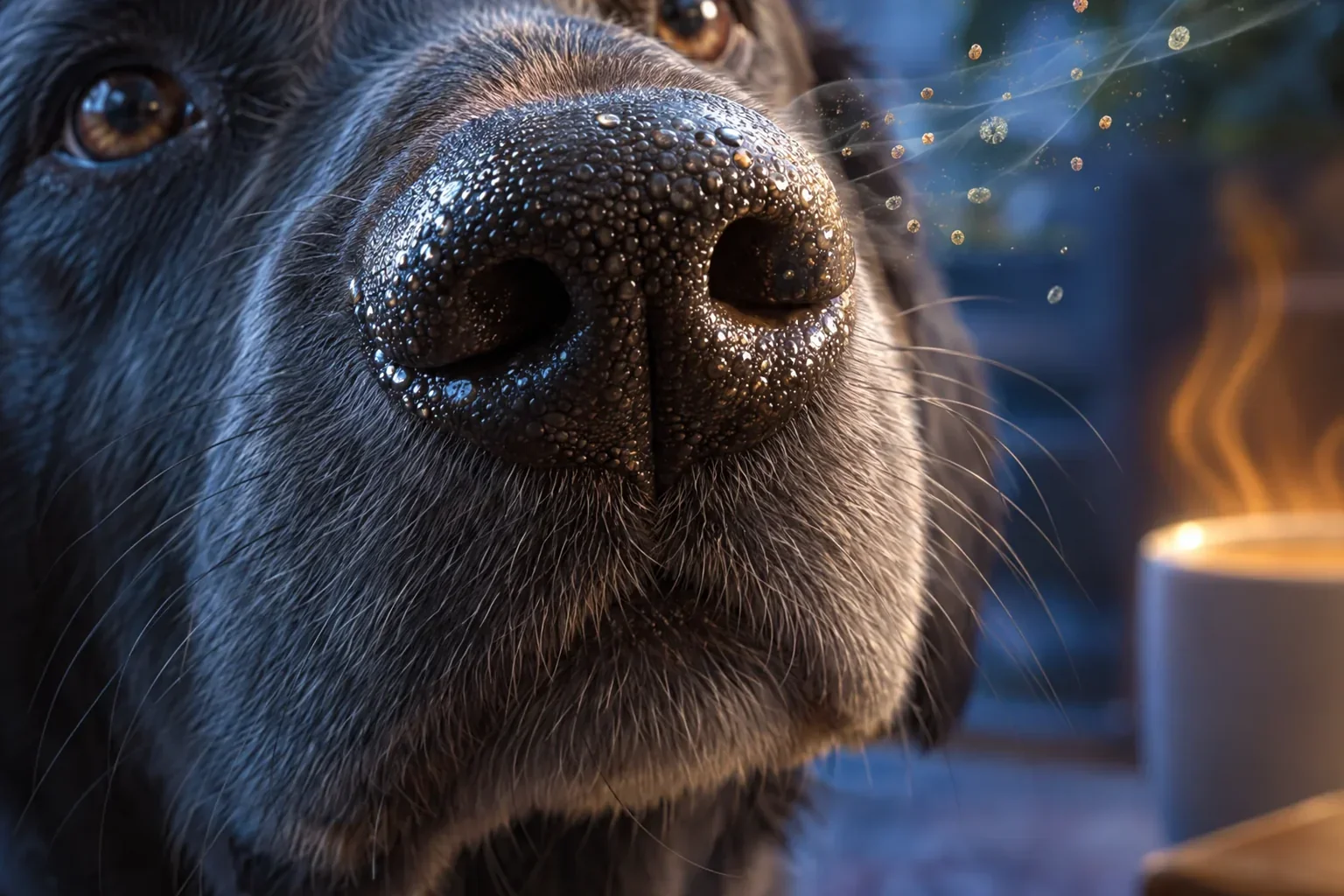
Why do dogs have wet noses?
That slimy layer is not a health sign — it is a sticky net that traps smell molecules. A 2020 study even found a dog's cool nose can sense weak heat from 1.5 metres away.