2 min
Why Is a Rainbow Curved Instead of a Full Circle?
Answer
The rain just stopped. You look up and there it is: a curved, colourful arch across the sky.
Guess first: is a rainbow a ribbon in the sky, or a circle?
1. Sunlight enters a raindrop and bends
When sunlight enters a raindrop it gets bent — that is called refraction.
2. It bounces off the back, then bends again on the way out
The light reflects off the inside back of the drop, then bends once more as it leaves. Each colour bends by a different amount, so red ends up on the outside and violet on the inside.
3. Every drop that shows you a rainbow sits on the same cone
The light leaves at about 42° from the line between your head and your shadow. Those drops form a cone, and the base of that cone is a circle whose centre is where your shadow falls.
Guess with me
- Guess: from an aeroplane, can you see the bottom half of a rainbow?
- Try: stand with your back to the Sun, spray a fine mist, and turn slowly until you find that 42°.
- Ask: why is red on the outside of a rainbow and violet on the inside?
So a rainbow really is a full circle. Standing on the ground, you only get to see the top half.
Send your answer to Michael
Thought about the three questions? Write to me — I will answer a few in the next post.
Email MichaelI'm Michael
I thought rainbows were ribbons painted in the sky. They are circles — the ground was hiding half of them.
Parents, want the original sources? Tap here
Related WHYS
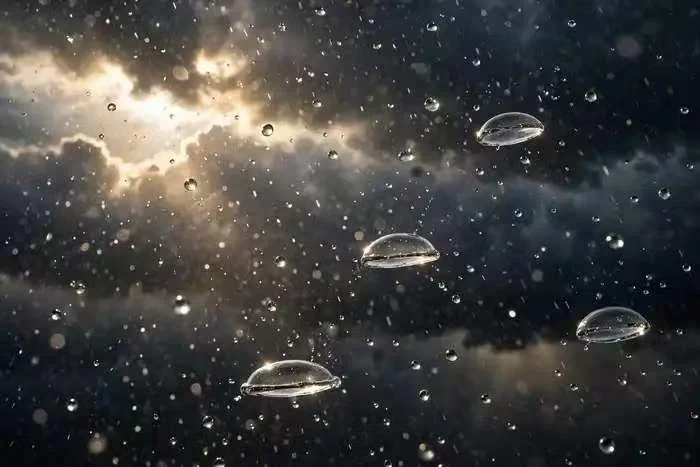
What does a raindrop really look like as it falls?
The teardrop we all draw has never actually fallen from the sky. Small raindrops are nearly perfect balls; bigger ones get squashed by the air into something like a hamburger bun.
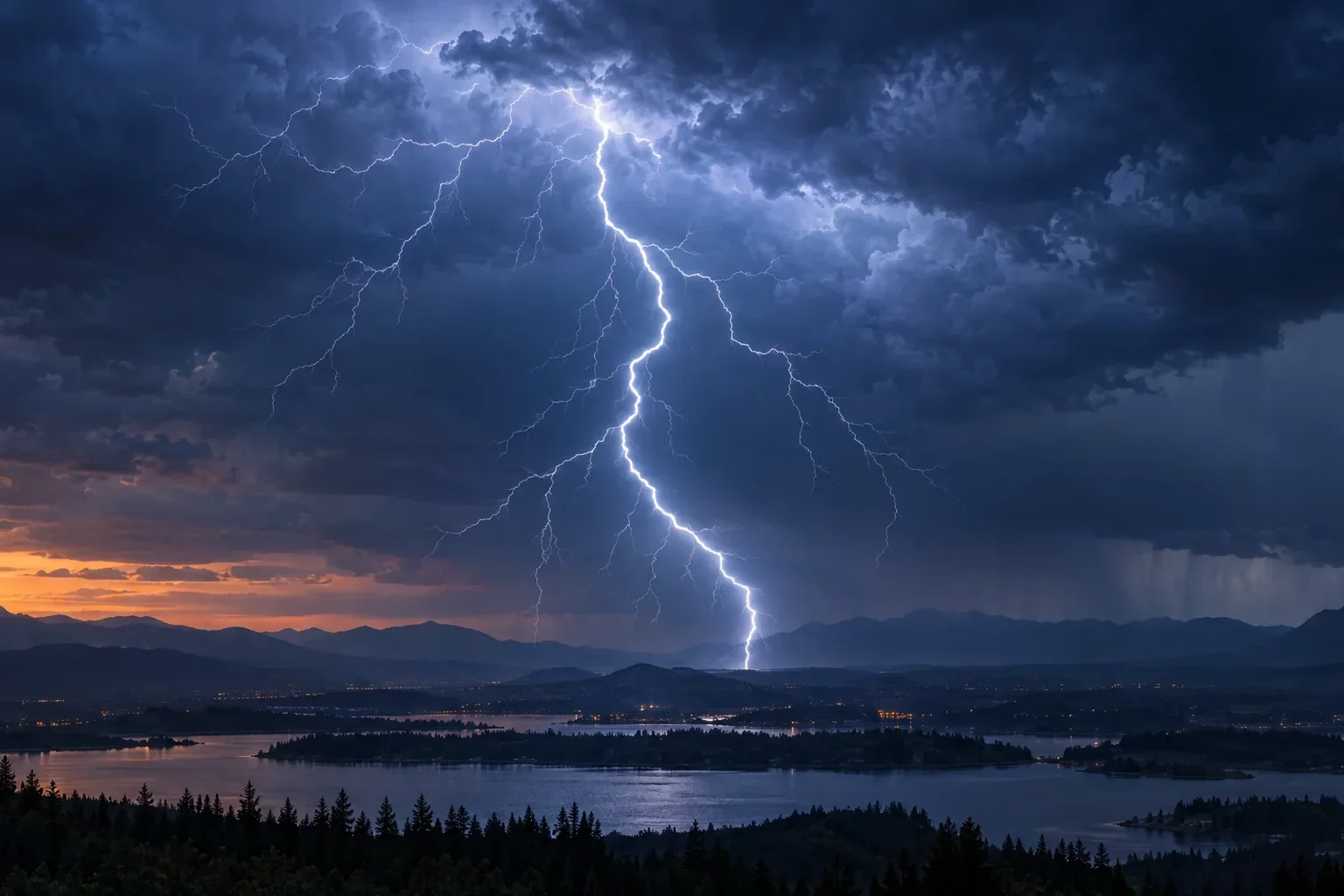
Why is lightning zigzagged instead of a straight line?
Lightning is a crooked, branching path. Because air does not conduct, charge has to feel its way forward one short step at a time. The bright flash we see is actually the return stroke racing back along the path already carved out.
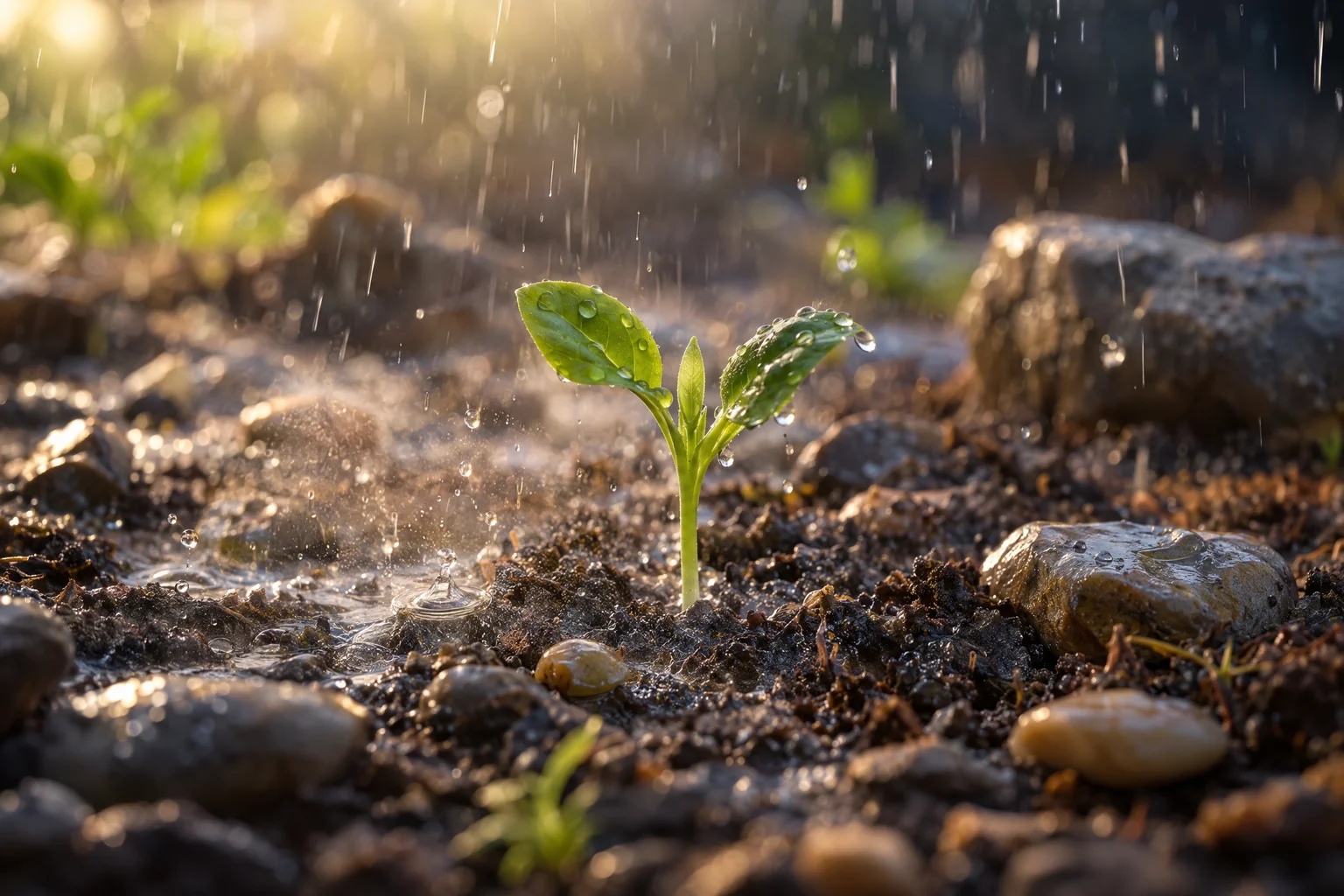
Why does the ground smell so good after it rains?
Rain has no smell of its own. That 'rainy' scent is oil stored in the soil during dry spells, blasted into the air by popping bubbles — starring geosmin, a molecule made by soil bacteria.