2 min
Why does the ground smell so good after it rains?
Rain has no smell of its own. That 'rainy' scent is oil stored in the soil during dry spells, blasted into the air by popping bubbles — starring geosmin, a molecule made by soil bacteria.

Answer
Have you ever noticed that the air smells different right after it rains? People call it 'the smell of rain' — but rain itself has no smell at all. That smell is made by the ground.
Here is the clue: the scent is strongest after a long dry spell, during the first light rain. Why? While the soil is dry, plant roots leak tiny amounts of oils into it. Clay and rock soak those oils up, storing them like a hidden jar of smell. When a raindrop hits the soil, it traps air in the little gaps and forms tiny bubbles. The bubbles float up and pop, blasting the stored oils — and molecules from the soil — into the air as a super-fine mist. In 2015, scientists at MIT used a high-speed camera to film exactly this.
The star of the smell is a molecule called geosmin. Soil bacteria called actinomycetes make it when they grow spores. Our noses are unbelievably good at finding it: we can notice it when there are only 5 parts per trillion in water. Geosmin is not really 'nice' by itself. Our brains simply learned that damp means water, and water means safe — so it smells like home. In 1964, two Australian scientists finally gave the scent a name: petrichor.
Try it yourself: get a cup of dry potting soil and split it in two. Add a little water to one half and leave the other half dry. Sniff each one. The wet soil will suddenly smell like rain; the dry soil will smell like almost nothing. You are smelling geosmin, launched into the air by popping bubbles.
Michael's Thought
I always thought that smell was the rain. Turns out the rain does nothing — it just blasts the smell out of the ground for me.
Sources
Related WHYS
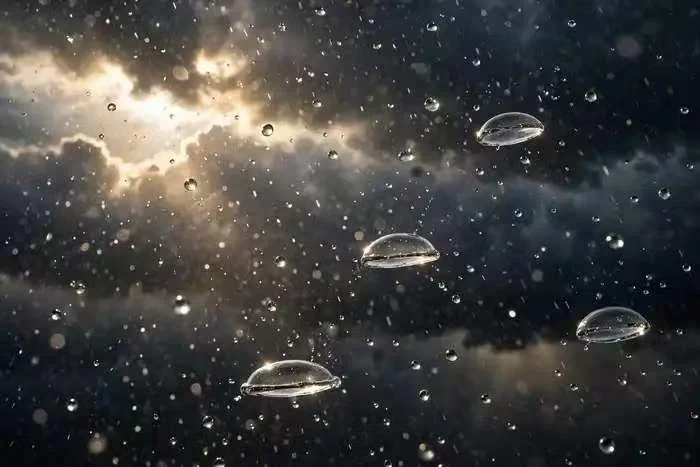
What does a raindrop really look like as it falls?
The teardrop we all draw has never actually fallen from the sky. Small raindrops are nearly perfect balls; bigger ones get squashed by the air into something like a hamburger bun.
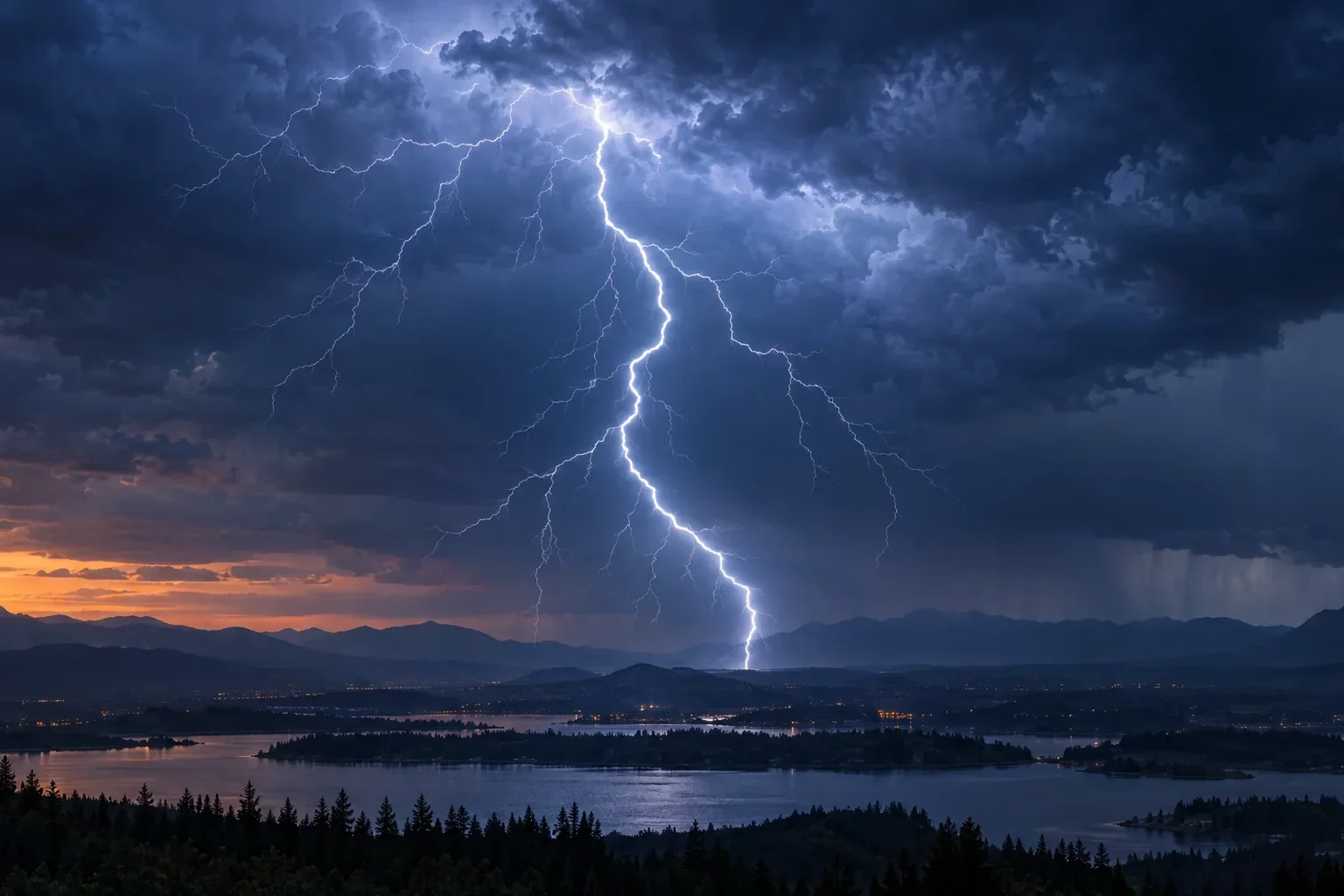
Why is lightning zigzagged instead of a straight line?
Lightning is a crooked, branching path. Because air does not conduct, charge has to feel its way forward one short step at a time. The bright flash we see is actually the return stroke racing back along the path already carved out.

Why do snowflakes always have six sides?
Snowflakes almost always have six sides, yet no two look alike. The six comes from the hexagonal skeleton of ice; the difference comes from the path each flake takes on the way down.