2 min
Why Does Popcorn Pop — and Jump Right Out of the Pot?
Answer
A handful of hard little corn kernels goes into a hot pot. A minute later: pop! White puffs tumble out and jump across the pan.
But ordinary corn does not do this when you boil it or bake it. Guess first: does the fire pop it, or does it pop itself?
1. It carries its own pressure cooker
A popcorn shell is thick, hard and almost waterproof, and it traps about 14 per cent water inside. Once the heat is on, that water cannot get out.
2. The pressure climbs to nine atmospheres
The water turns to steam and the pressure builds to about nine atmospheres, with the inside reaching roughly 180 °C. The shell stretches tighter and tighter.
3. When it gives way, the kernel jumps
The shell splits, steam rushes out, and the softened starch is blown into a foam. The starch even pushes out a little leg, kicks the pot, and launches the puff into the air.
Guess with me
- Guess: why do some kernels never pop? Are they broken, or are they missing something?
- Try: wrap the unpopped kernels in a damp paper towel for two days, then pop them again.
- Ask: that "pop" sound — is it the kernel hitting the bottom of the pot?
So popcorn is not popped by the fire. It is popped by itself — the fire only boils the water.
Send your answer to Michael
Thought about the three questions? Write to me — I will answer a few in the next post.
Email MichaelI'm Michael
I thought the fire popped the corn. The fire only boils the water — the nine atmospheres do the work.
Parents, want the original sources? Tap here
Related WHYS
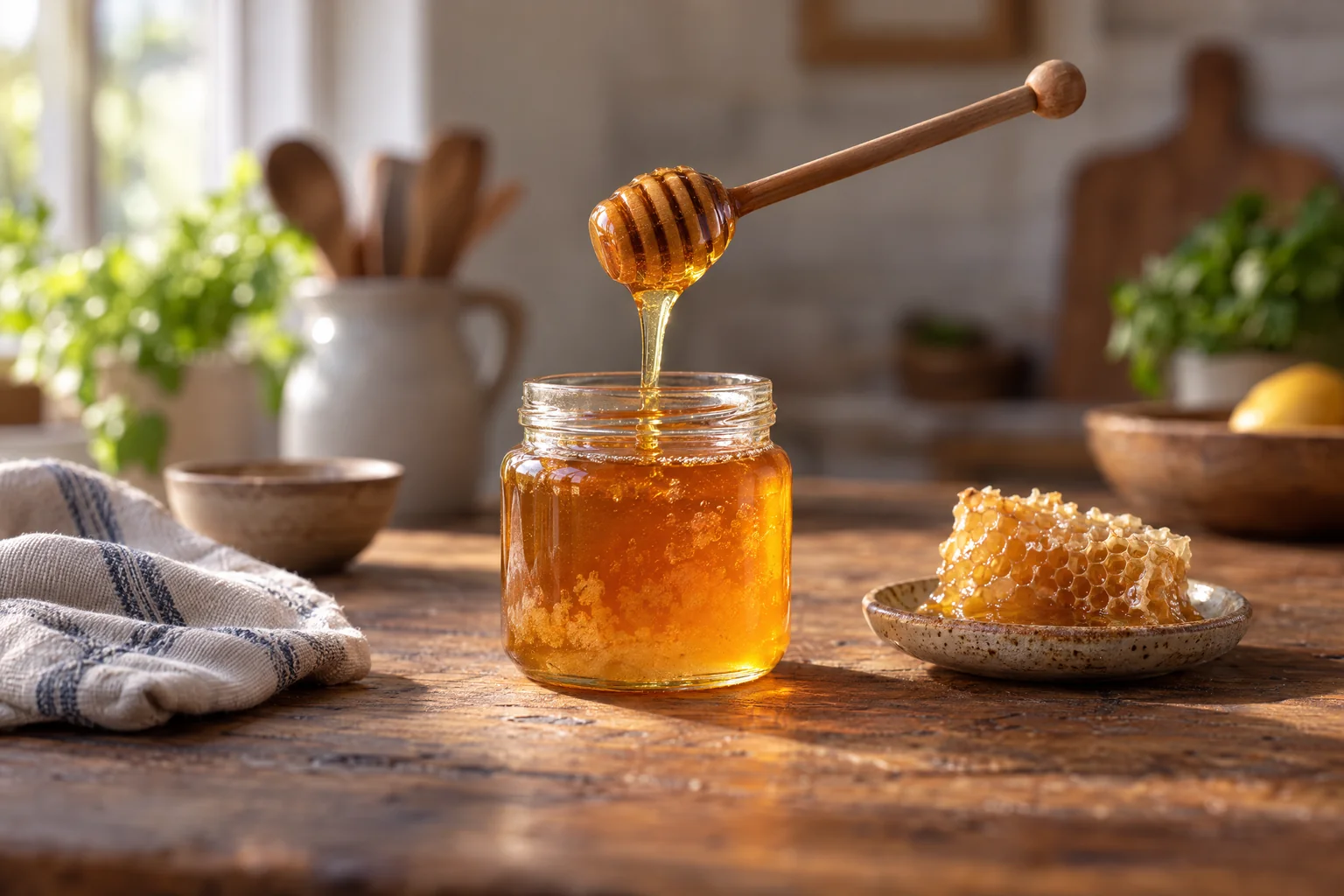
Does honey really never spoil?
Honey keeps for years thanks to three defences: very little water, natural acidity, and a mild antiseptic that bees add themselves. But its one weak spot is moisture — sealing the jar matters more than chilling it.

Why does eating pineapple make your tongue feel like it is being bitten?
It is not the sourness. Pineapple carries enzymes that cut proteins — and your tongue is made of protein. The same enzymes stop gelatine jelly from setting, yet cannot touch agar.

Why does cilantro taste like soap to some people?
Cilantro leaves get their smell from aldehydes, the same family of molecules found in soap. Whether you taste soap or freshness depends on a smell-receptor gene called OR6A2.