2 min
Why does Roman concrete get stronger the longer it sits in the sea?
Today's concrete crumbles in seawater within decades, yet Roman sea walls get harder. The secret is volcanic ash plus lime — and tiny lumps of lime that seal cracks by themselves.
Answer
An experiment that has been running for 2,000 years
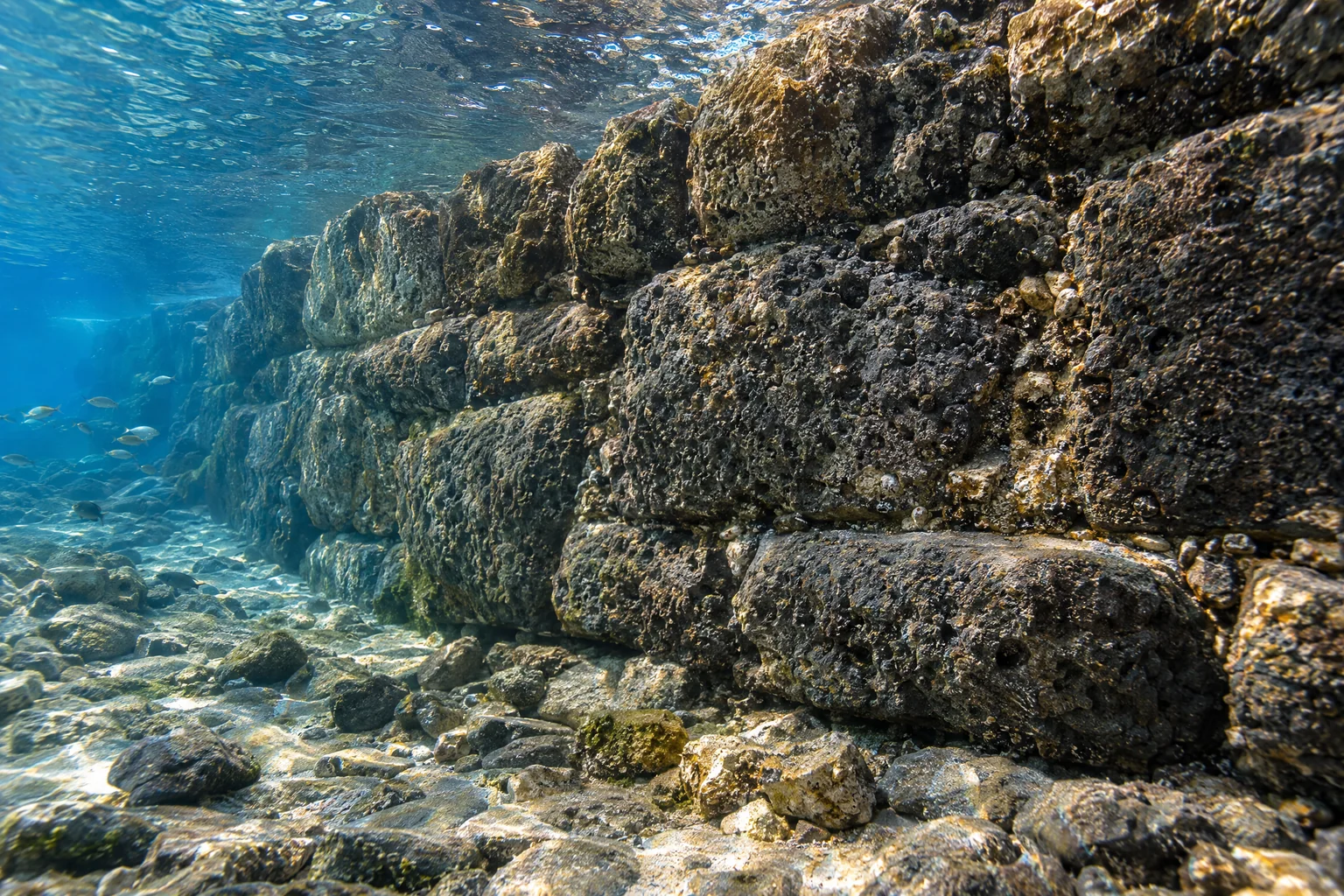
On the coast of Italy, there is a Roman sea wall that has been sitting in the water for two thousand years. Here is the strange part: the part under the seawater is stronger than the part in fresh water. Today's concrete crumbles in seawater after a few decades. How did the Romans do it?
The secret is in the ash
The Romans could not bake cement at 1450°C the way we do. So they took a different road: they mixed volcanic ash with lime. Near Naples there is a place called Pozzuoli, where the volcanic sand is as fine as flour.
Magnesium and chloride from seawater soak into tiny cracks and slowly react with the ash. The reaction grows crystals, such as phillipsite. Like salt crust, these crystals fill the cracks and seal them shut. The reaction does not use up its ingredients. As long as seawater keeps coming, it keeps going — so the concrete keeps getting stronger.
The second trick: cracks that heal themselves
In 2023, a team at MIT looked at Roman concrete under a microscope and found many small white lumps of lime. The Romans had thrown quicklime straight into the mix and used the heat of the reaction to build. Not all the lime got mixed in, so those little lumps stayed inside.
Most of the time they do nothing. But when water reaches a crack, the lumps dissolve again and re-crystallize, sealing the crack on their own. The concrete carries its own bandage.
The Romans did not understand the chemistry. Pliny the Elder only wrote down what he saw: this sand becomes hard in seawater.
Try it yourself
Snap a piece of chalk in half. Put one half in water and the other half in white vinegar. The piece in vinegar will fizz and go soft, because chalk is calcium carbonate and does not like acid. The acid and salt in seawater do the same thing to today's concrete.
(Safety: use white vinegar only. Never use strong acids.)
Michael's Thought
The Romans didn't have better machines. They just had the right sand nearby — and they won. So maybe the cement in our garage isn't bad. Maybe it just picked the wrong neighbour.
Sources
Related WHYS

Why do barbershops have a red, white and blue spinning pole?
That spinning pole outside a barbershop is not decoration. It is the old sign of a barber-surgeon: the pole is the stick the patient gripped, the top basin held leeches, and the bottom one caught the blood.
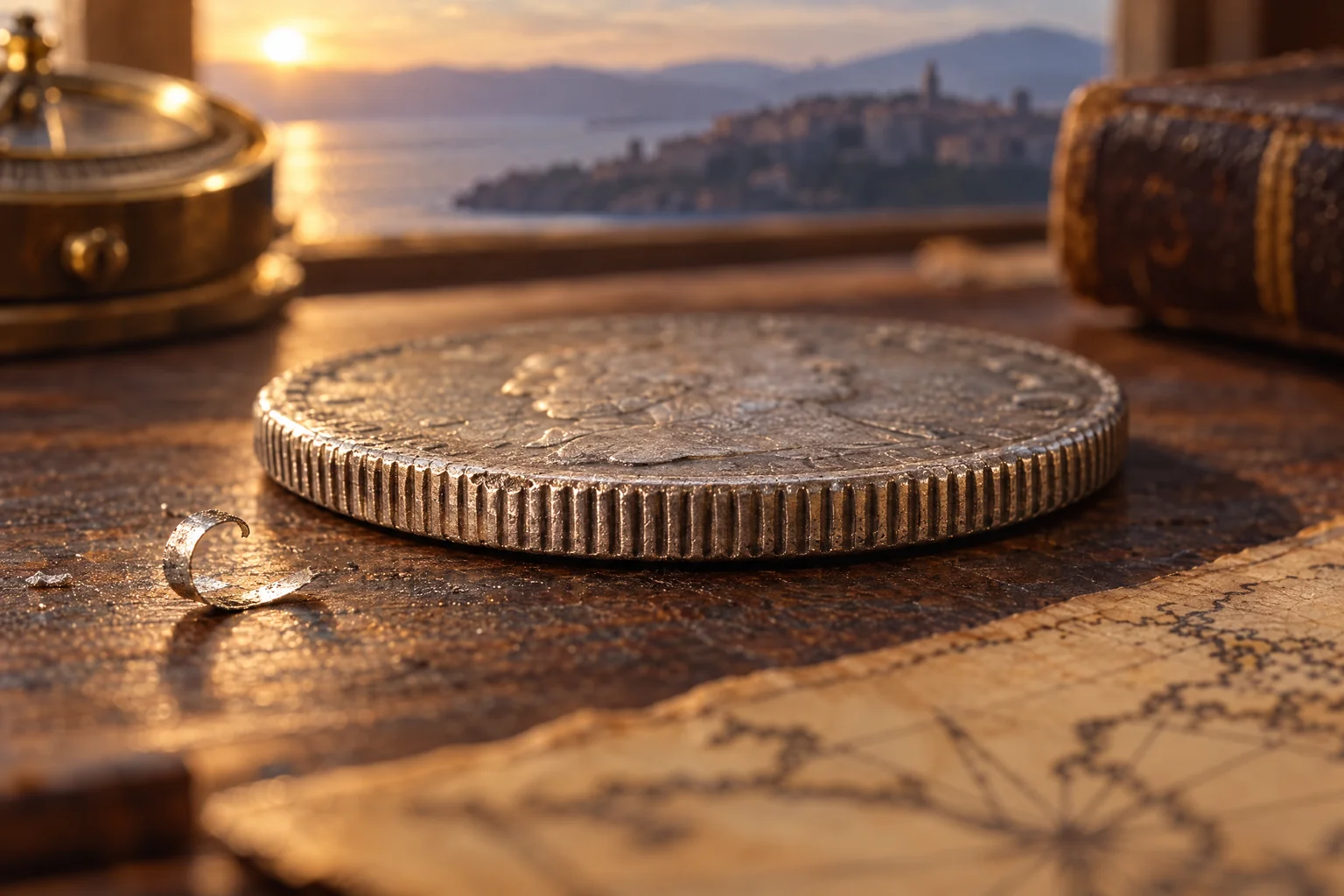
Why do coins have ridged edges?
Those tiny ridges on a coin's edge are not decoration. Long ago a coin was worth the metal inside it, so people shaved silver off the edges and spent the coins anyway. The ridges make any missing metal easy to spot — and the Latin words pressed into the edge literally mean "an ornament and a safeguard".
Why is an hour 60 minutes long, and a day 24 hours?
Twenty-four hours and sixty minutes came from two different ancient civilisations — Egypt's twelve star-groups and Babylon's base-60 counting. A quick bean experiment shows why 60 was so handy.