3 min
Why does a mint candy feel icy cold when it is just room temperature?
A mint candy cools nothing down, yet it feels like ice. Menthol simply flips the body's cold switch, TRPM8, so the brain receives a fake message that says cold.

Answer
A ten-second experiment
Fill two cups with water and let them sit until they feel the same temperature. Suck on a mint candy for thirty seconds, then drink from the first cup. It will feel noticeably colder. Rinse your mouth, drink from the second cup, and the cold feeling goes back to normal.
Same water. Same cups. What changed was your tongue.
The cold alarm in your tongue
Your skin and tongue are full of nerve endings that report "cold". On the surface of those endings sits a protein channel called TRPM8. Its nickname is even more direct: the cold and menthol receptor.
Normally it behaves itself. When the temperature drops below about 26°C, the channel opens, sodium and calcium ions rush into the cell, the nerve fires, and your brain gets a message: cold.
26°C is the height of its doorbell.
Menthol brings its own key
Menthol is the molecule behind the cool taste of mint. Its trick is to pick the lock directly — no cooling needed, the door still opens.
Wikipedia puts it plainly: menthol can chemically trigger the cold-sensitive TRPM8 receptors in the skin, and that is where the well-known cooling sensation comes from. So your mouth is at 37°C, but your brain receives a telegram that says "cold".
In other words, the candy is not cold. Your nerves are speaking on its behalf.
The same trick, in reverse
Capsaicin, the molecule in chili peppers, opens a different channel called TRPV1, which reports heat and pain. That is why spicy food feels like burning, not like a taste — and the temperature never actually goes up. As Wikipedia notes, it stimulates heat sensors without causing a real change in temperature.
In 2021, the Nobel Prize in Physiology or Medicine went to the discovery of these temperature and touch receptors.
One strange loose end
TRPM8 is not only in skin and tongue. It also shows up in the prostate, the lungs and the bladder. What it is doing there is still not fully understood.
Try this at home
Rub a little mint toothpaste on the back of your hand. Wait a minute, then press a thermometer against it — the temperature has barely moved. Now blow on that spot. It feels colder, because the air carries a little heat away while TRPM8 has already turned up the volume.
Cold is an explanation, not a thermometer.
Michael's Thought
I stuck a mint candy against the thermometer and the thermometer did not move at all. So the cold was in me, not in the candy.
Sources
Related WHYS

Why do we hiccup, and why can't we stop?
A hiccup is not a random twitch: the diaphragm jerks, then the glottis snaps shut about 35 milliseconds later, cutting off the air. Hiccups have been recorded only in mammals — and tadpoles use almost the same reflex to push water over their gills.
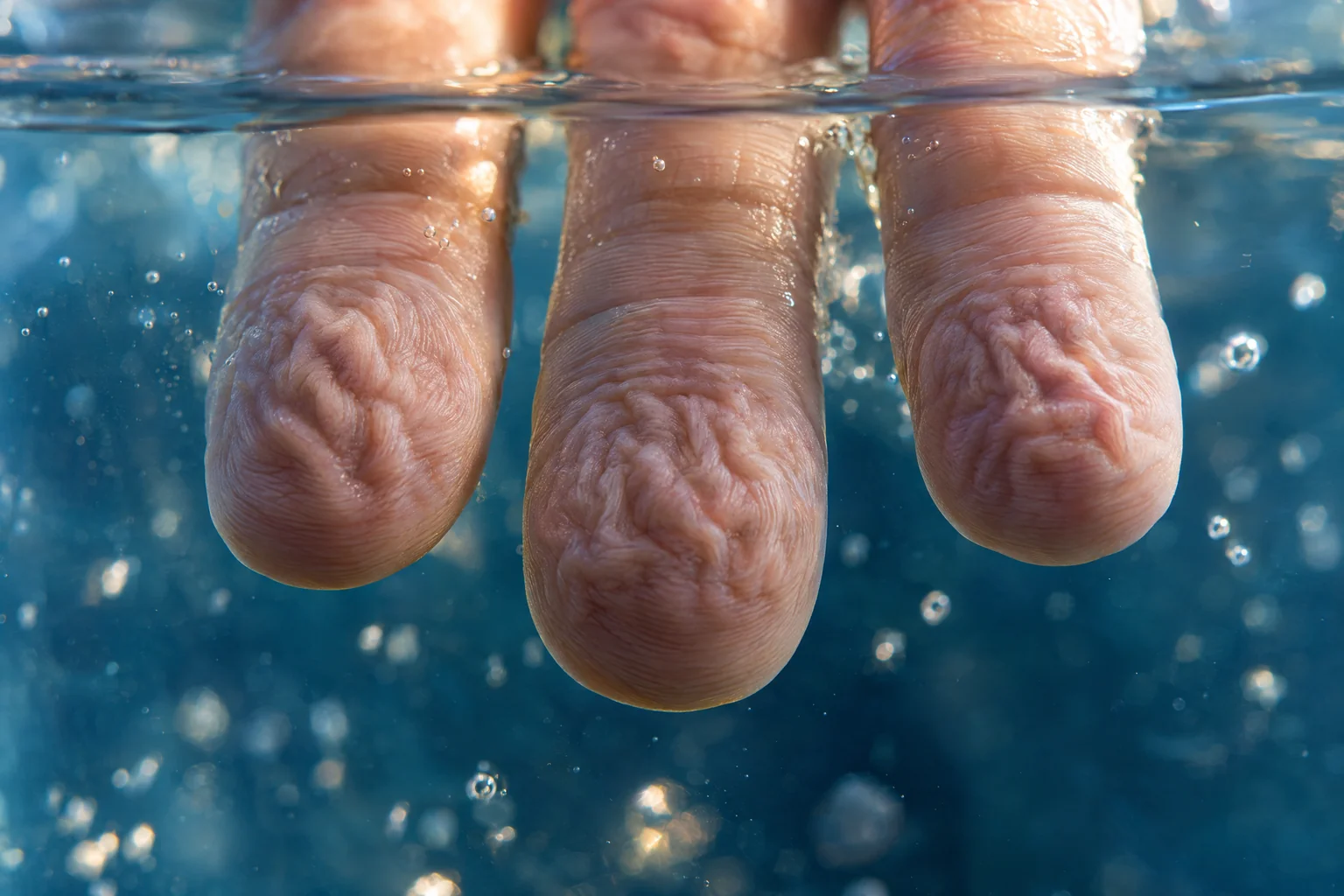
Why do your fingers wrinkle in water?
Wrinkly fingers are not swollen skin. Your nerves tell the blood vessels underneath to squeeze shut, the fluid is pulled away, and the skin sinks into folds. Nerve-injury patients gave the secret away back in 1935.

Why does looking at my phone in the car make me feel sick?
Your inner ear says "we are moving" while your eyes say "we are not". When two senses disagree, your brain falls back on its oldest safety program: nausea. Carsickness is not weakness — it is a wrong button.