2 min
Why do onions make you cry — and why does holding it in make it worse?
The onion is not trying to hurt you. It is defending itself. The moment a knife breaks its cells, two chemicals that were stored apart mix and make a gas that goes straight for your eyes.

Answer
The onion is not trying to hurt you. It is defending itself.
When a knife cuts through an onion's cells, two chemicals that were kept apart — alliin and an enzyme called alliinase — suddenly meet and react. The reaction produces a gas called propanethial S-oxide, which drifts up to your eyes. There it reacts with the thin film of water on your cornea and forms a trace of weak sulphuric acid. Your nerve endings report the sting, and your brain orders your tear glands to flood the eye and wash it away.
Here is the annoying part: the harder you try not to cry, the worse it gets. Holding it in keeps your eyes dry, the gas builds up, the sting gets stronger, and the tears come harder. The old tricks — a chopstick between your teeth, swimming goggles — all work by keeping the gas away from your eyes or blowing it away faster.
The method that actually works: chill the onion in the fridge for 15 minutes first. Cold slows the enzyme down sharply, so the reaction runs slower and far less gas is produced.
In one line: onion tears are not emotion, they are chemical warfare. You cry because the onion, the moment it is cut, runs its last self-defence program.
A stranger fact: why do cut onions sting your eyes but garlic does not? Because the sulphur compounds garlic makes dissolve in water far more easily, so most of them stay in the juice. Propanethial S-oxide escapes into the air very readily, and it goes for your eyes.
Michael's Thought
So I am not crying because I am sad — I am crying because the onion is defending itself. That means I can cry in the kitchen without being embarrassed.
Sources
Related WHYS
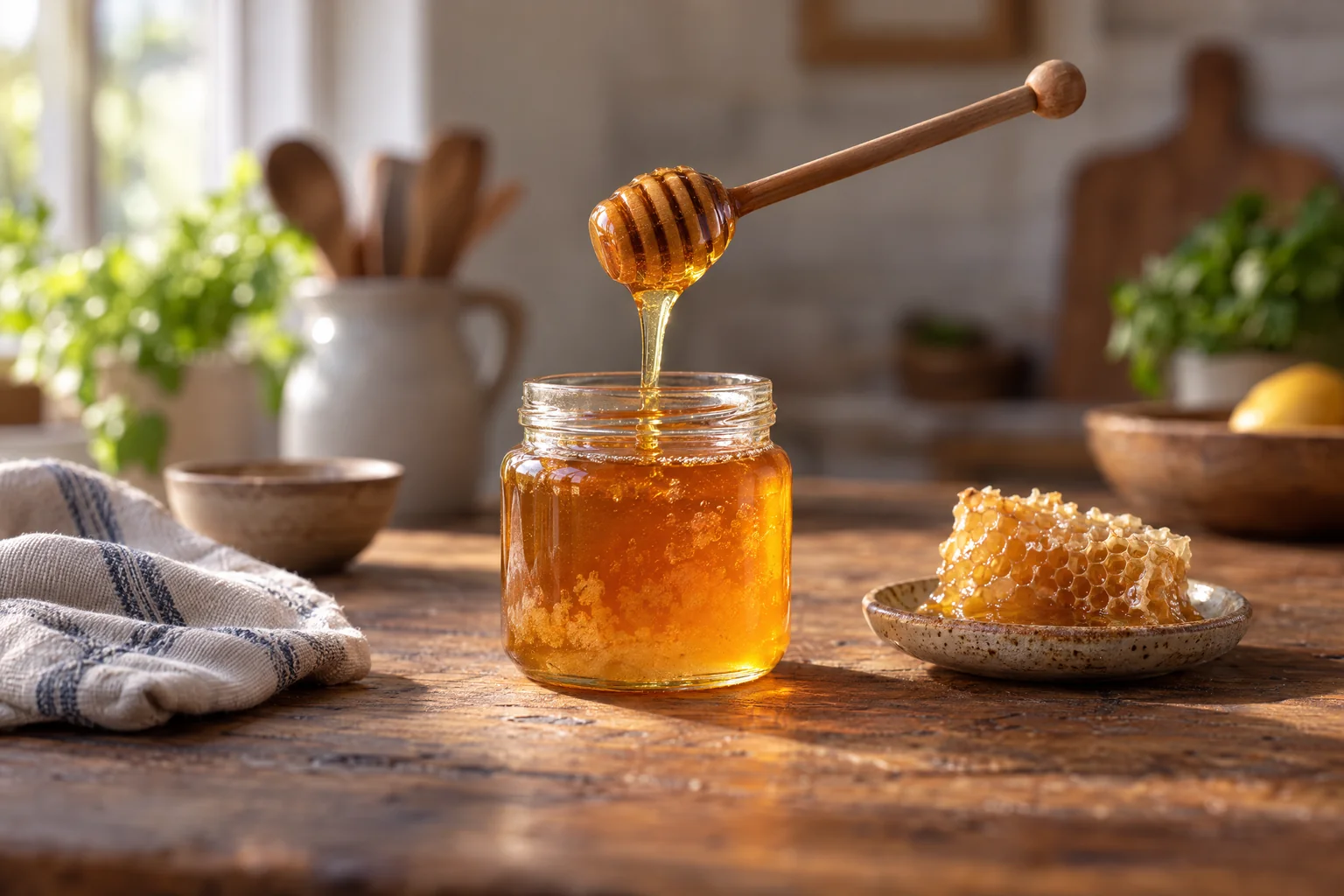
Does honey really never spoil?
Honey keeps for years thanks to three defences: very little water, natural acidity, and a mild antiseptic that bees add themselves. But its one weak spot is moisture — sealing the jar matters more than chilling it.

Why does eating pineapple make your tongue feel like it is being bitten?
It is not the sourness. Pineapple carries enzymes that cut proteins — and your tongue is made of protein. The same enzymes stop gelatine jelly from setting, yet cannot touch agar.

Why does cilantro taste like soap to some people?
Cilantro leaves get their smell from aldehydes, the same family of molecules found in soap. Whether you taste soap or freshness depends on a smell-receptor gene called OR6A2.