2 min
How does a curved arch hold up a heavy wall?
Answer
Have you ever built a bridge out of blocks? Two blocks as piers, one long block across the top — and when you press it, the long block sags in the middle. Swap that block for a few stones curved into an arch, and it holds. Guess first: does an arch carry weight because the stones are glued tight, or because the stones never get bent at all?
1. A beam bends first
A flat stone across a gap is a beam. Weight squeezes its top and stretches its bottom. Stone is strong in squeezing and terrible in stretching, so a long beam cracks underneath.
2. An arch trades bending for squeezing
An arch refuses to bend. Each stone is cut like a wedge and jammed against its neighbours, so every stone is squeezed and none is stretched. Squeezing is exactly what stone does best.
3. The push splits in two
The weight slides down the curve to the feet of the arch and splits in two: one part pushes down into the ground, one part pushes outward. That outward push is called thrust, and something must catch it — a thick wall, the next arch, or a steel tie.
Guess with me
- Guess: If the walls beside an arch were thin and could slide outward, what would happen to the arch?
- Try it: Stack some books as piers, bend a stiff card into an arch, wedge a block at each end, then load the top. Tell me tomorrow how much it held.
- Ask me: Is the stone at the very top — the keystone — the hardest-working stone in the whole arch?
Send your answer to Michael
Thought about the three questions? Write to me — I will answer a few in the next post.
Email MichaelWrite to Michael
Write down your answer and press send — it lands in my inbox. I will answer a few in the next post.
I'm Michael
I pushed the sides of the arch bridge I drew, and it just flattened out. So an arch's biggest fear isn't the weight on top — it's having nothing to push back against.
Parents, want the original sources? Tap here
Related WHYS
Why is the sky blue and not purple?
The sky is not painted blue. Blue light just gets thrown around the most.
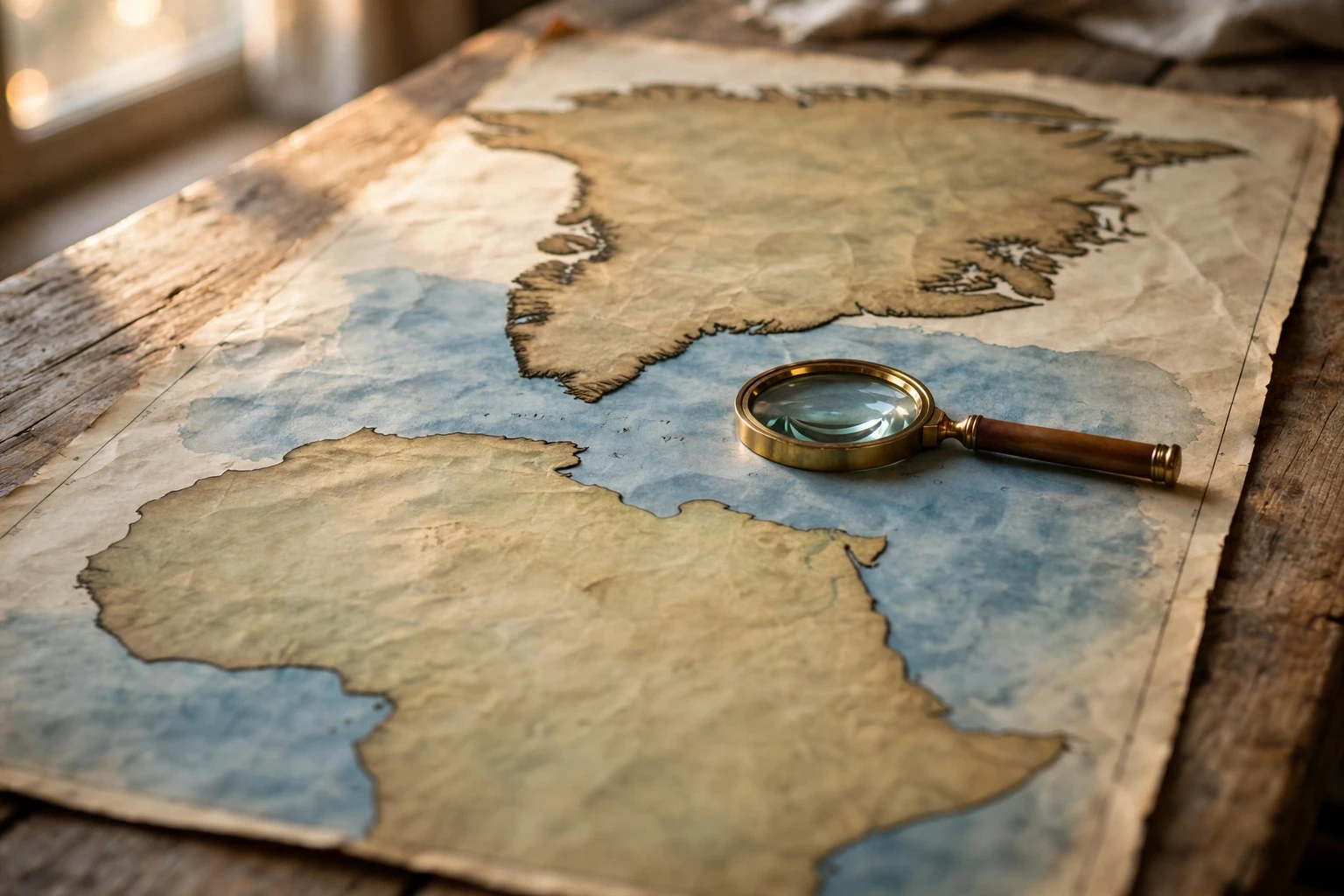
Why does Greenland look as big as Africa on a world map?
On a world map, Greenland looks almost as big as Africa. In reality Africa is 14 times larger. The map is not misprinted — it is a trade-off made so sailors never have to turn.

Why is writing backwards in a mirror? — And the direction a mirror flips isn't left-right at all
A mirror only reverses the axis pointing straight out of the glass — front to back. The famous left-right flip is not optics at all; it is a story our brain writes.