2 min
Why does bread go hard while biscuits go soft?
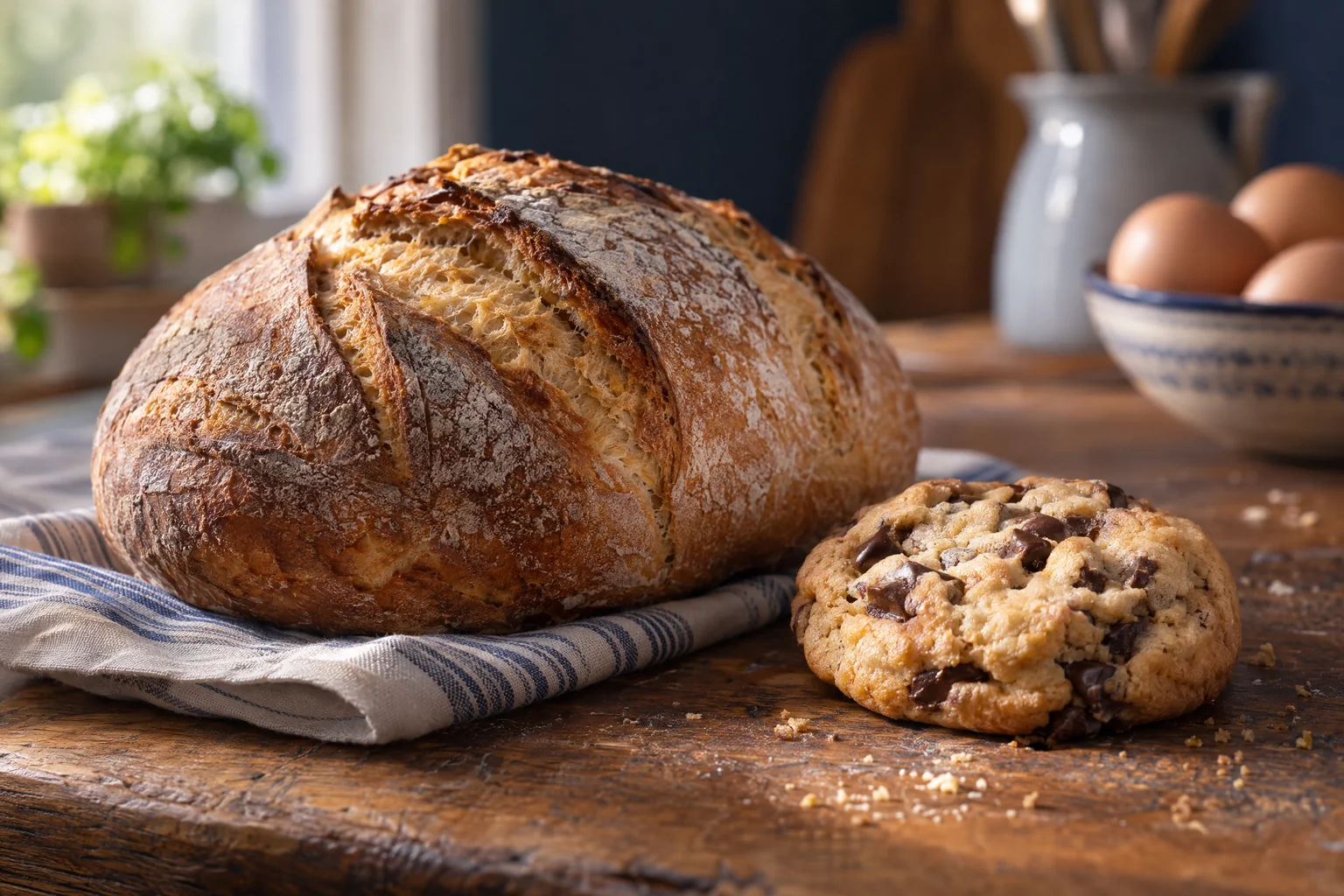
The bread is losing water while the biscuit is gaining it. In the same cupboard, two baked things are running the same process in opposite directions.
Answer
You open the cupboard and find that the sliced bread you bought two days ago is as hard as a brick, while the crackers next to it have gone limp. They were in the same cupboard the whole time.
Why bread goes hard
- Starch retrogradation. In fresh bread, the starch swelled up with water during baking and its structure is loose. As it cools, the molecules rearrange into tight crystals — and squeeze the water back out.
- The water leaves. That squeezed-out water slowly evaporates into the air. The inside of the bread dries out, and the texture goes from soft to stiff.
- It does not reverse. Once those crystals have formed, reheating only partly undoes them. That is why toasting brings back a little softness but never tastes like fresh bread.
Why biscuits go soft
- Sugar and salt pull in water. A biscuit recipe contains far more sugar and salt than bread does, and both of those grab water molecules out of the air.
- It starts very dry. A biscuit leaves the factory at about 3% water. That enormous gap in humidity between the biscuit and the air turns it into a water magnet.
- The structure collapses. As water moves in, the sugar starts to dissolve and the crisp, airy structure glues itself together. The crunch becomes a chew.
In one line: the bread is losing water and the biscuit is gaining it. In one cupboard, two baked things are running the same physical process in opposite directions — because the recipe decides which way the water goes.
What actually helps: freeze bread in a sealed bag. At −18°C starch retrogradation almost stops completely. And drop a sachet of desiccant into the biscuit tin — it can absorb up to 40% of its own weight in water.
Michael's Thought
In the same cupboard, one is losing water and one is taking it in. I used to think old food just gets worse — I never realised it was two opposite things happening.
Sources
Related WHYS
Does honey really never spoil?
Honey keeps for years thanks to three defences: very little water, natural acidity, and a mild antiseptic that bees add themselves. But its one weak spot is moisture — sealing the jar matters more than chilling it.
Why does eating pineapple make your tongue feel like it is being bitten?
It is not the sourness. Pineapple carries enzymes that cut proteins — and your tongue is made of protein. The same enzymes stop gelatine jelly from setting, yet cannot touch agar.
Why does cilantro taste like soap to some people?
Cilantro leaves get their smell from aldehydes, the same family of molecules found in soap. Whether you taste soap or freshness depends on a smell-receptor gene called OR6A2.